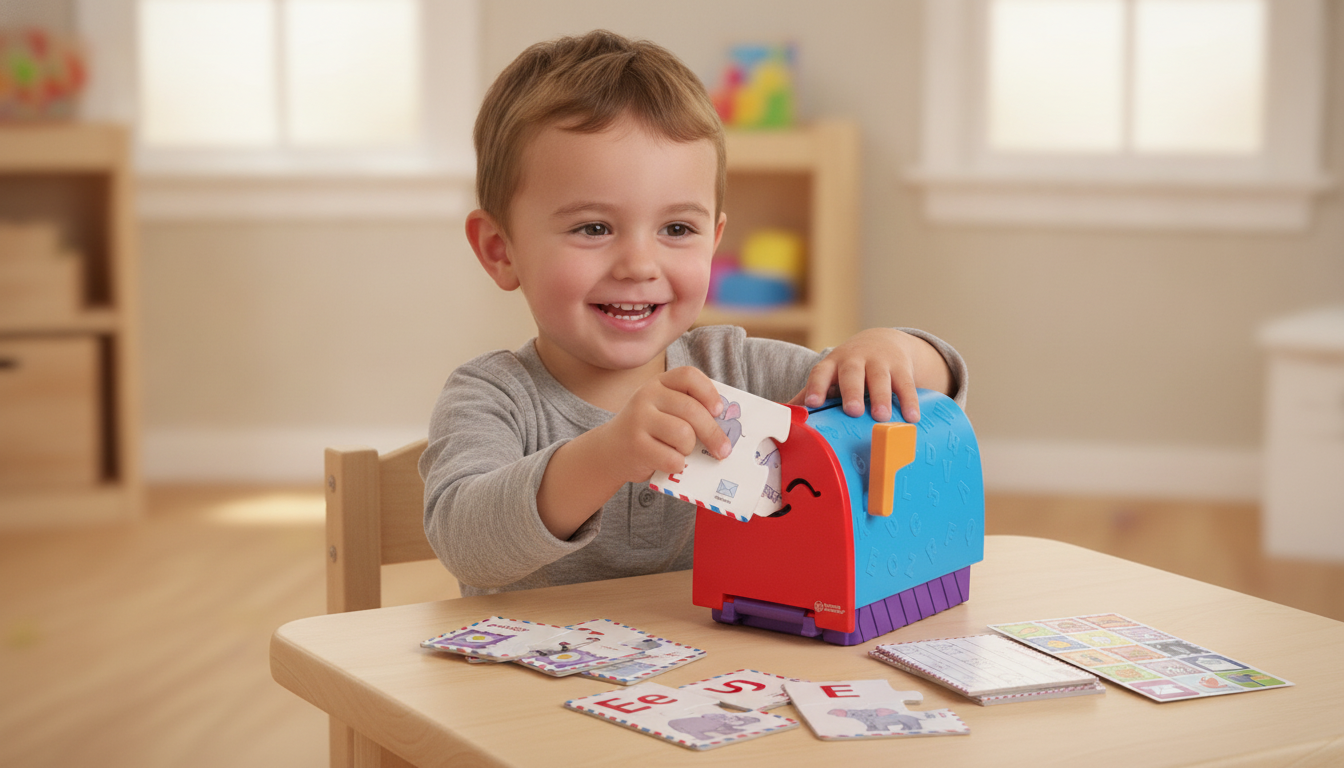
Players match 26 double-sided puzzle pieces connecting uppercase and lowercase letters. Includes 5 double-sided write and wipe cards for tracing and letter practice, plus puffy postage stamp stickers. Pieces store inside a mailbox.
Who this toy suits
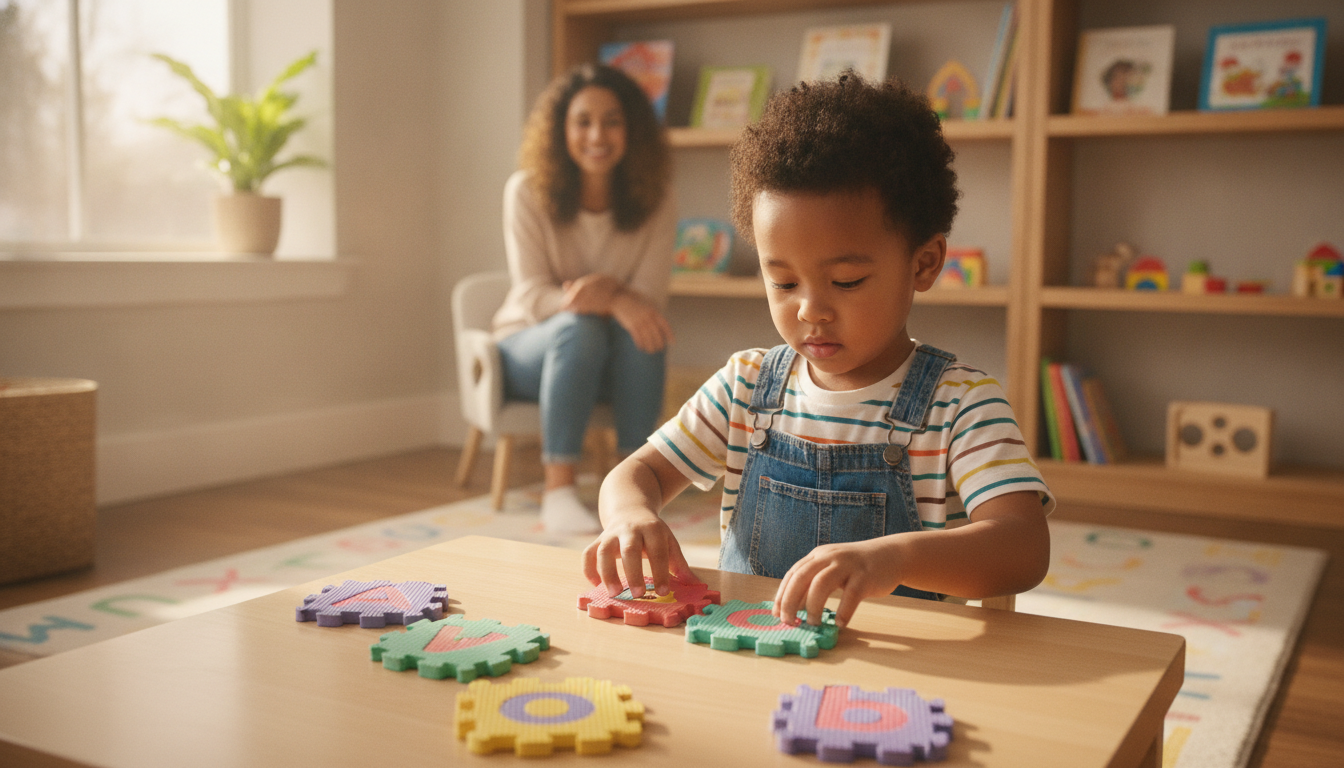
The Learning Resources Alphabet Learning Mailbox is designed for children aged 4 years and up, as recommended by the manufacturer. It is suitable for preschool and early kindergarten children who are beginning to explore letter recognition, matching, and basic writing practice. This toy may appeal to young learners interested in letters and imaginative play, such as pretend mail delivery. It is not appropriate for children under 4 years old due to small parts that may pose a choking hazard; supervision does not make it suitable for younger children.
What children can do and learn
- Match letters: Children can pair uppercase and lowercase letter puzzles, name the letters and use them in a pretend delivery activity. This is a hands-on matching task described in the listing.
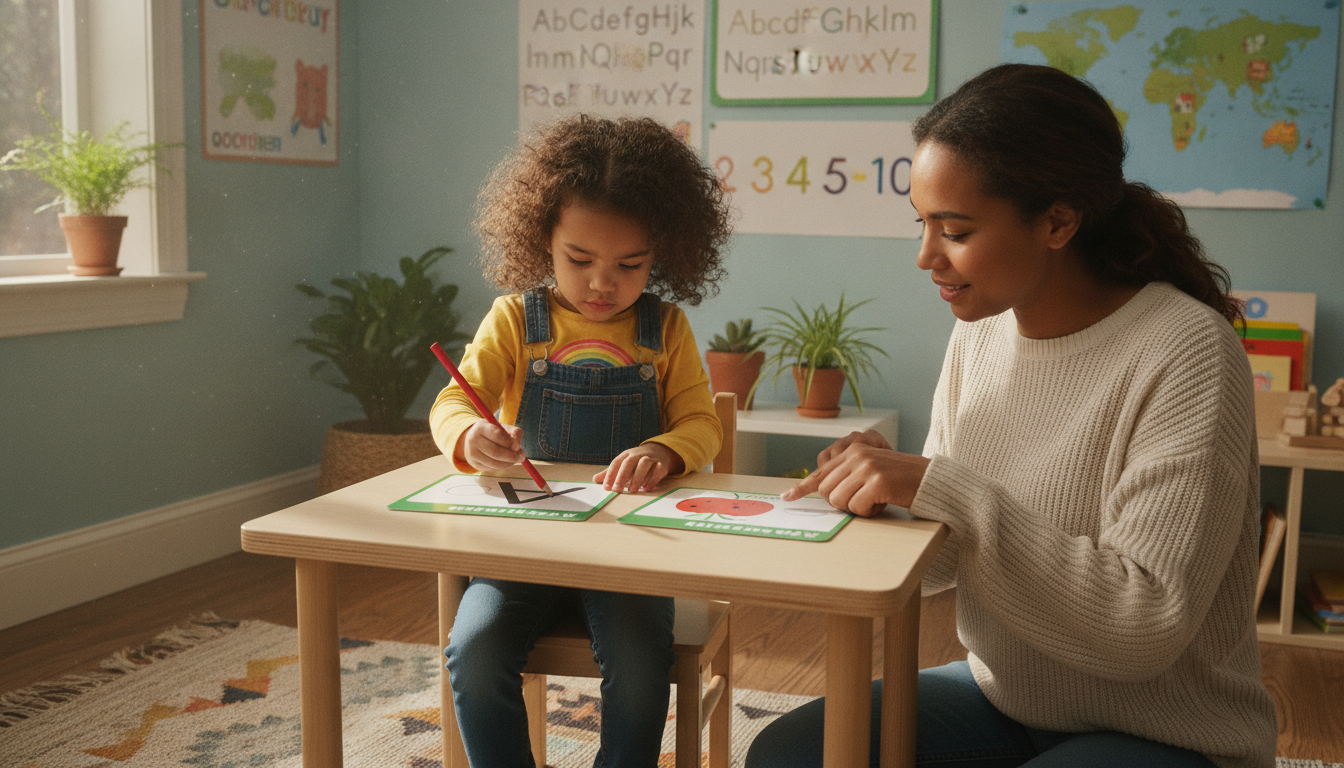
- Use the tracing cards: The write-and-wipe cards offer repeated opportunities to try letter-shaped hand movements. NAEYC includes drawing and writing materials among general fine motor play suggestions. That guidance does not establish a particular benefit from this mailbox set.
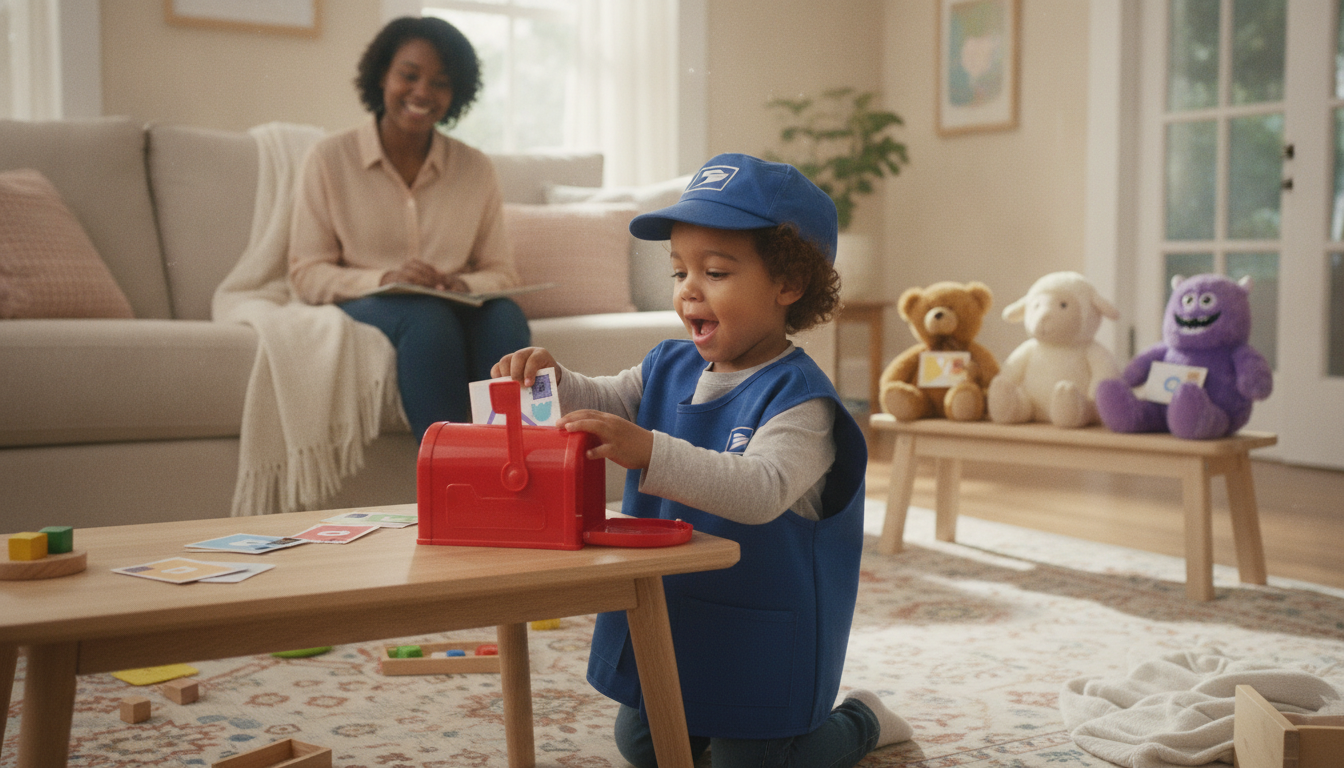
- Make up a delivery story: Children can decorate a pretend message with the postage stickers, post it and take turns delivering it to a family member. The AAP's general guidance on play discusses pretend play, sharing and taking turns. Parents can use those general ideas during a mail-themed activity without treating the toy as a tested learning intervention.
Play ideas to try
- Mailbox letter delivery: Have your child sort and post letter puzzle pieces into the mailbox, naming each uppercase-lowercase pair as they go. This combines letter matching with pretend delivery play.
- Tracing repetition: Use the write-and-wipe cards to trace letters, then erase and try again. Encourage your child to focus on forming each letter carefully.
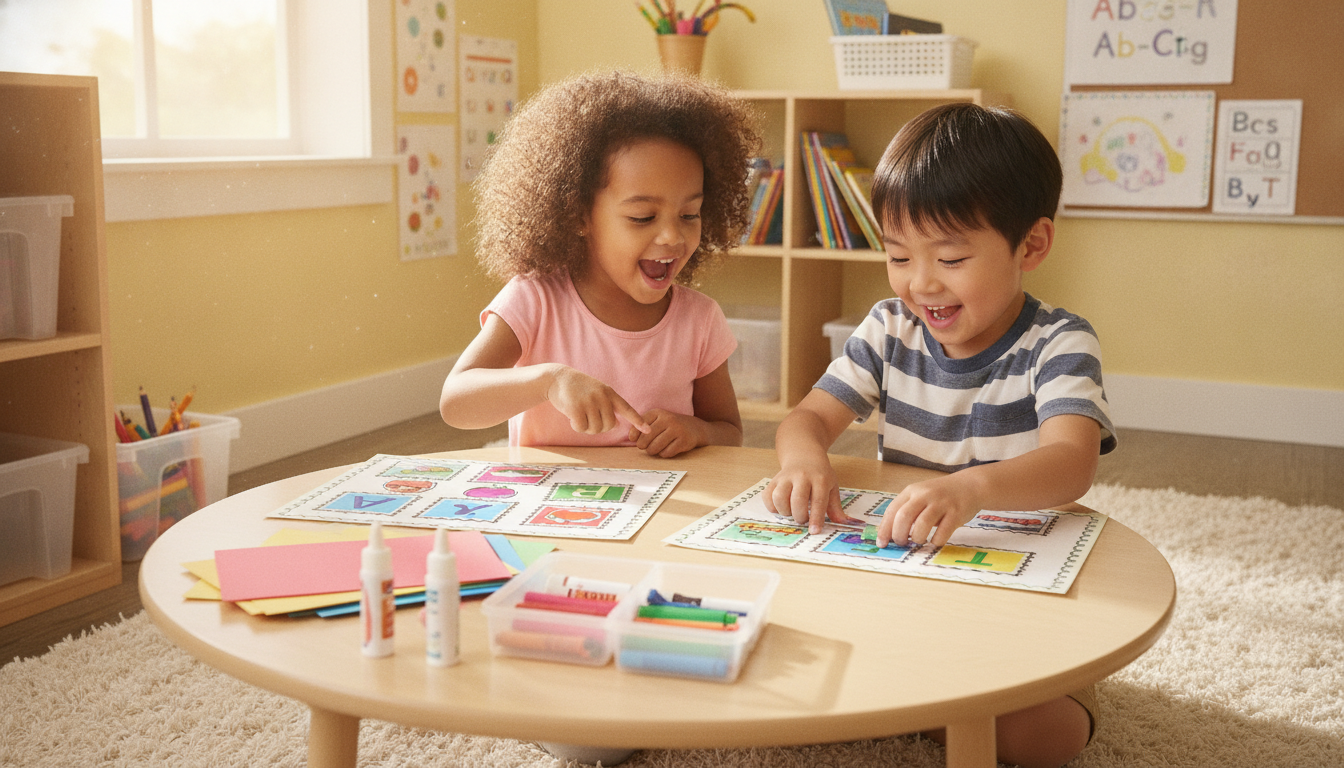
- Sticker story building: Add postage stamp stickers to cards or puzzles, and ask your child to say the letters or describe the pictures, encouraging vocabulary and letter-sound connections.
Optional parent suggestions:
- Create a simple letter scavenger hunt by hiding puzzle pieces around the room and having your child find and match them.
- Encourage your child to "deliver" letters to family members or stuffed animals, practicing social interaction and imaginative play.
Before you buy
- The set contains 62 pieces: 26 two-piece letter puzzles, 5 double-sided write-and-wipe cards, 30 puffy stickers, and a mailbox for storage. Consider whether your child enjoys toys with many small pieces or if fewer components are preferable.
- Puzzle pieces are small and may pose a choking hazard; this toy is only suitable for children 4 years and older as advised by the manufacturer.
- This toy blends alphabet learning with pretend play. Children who are not interested in letters or letter activities might prefer toys that focus on sensory or gross motor skills instead.
When another type may fit
If you are looking for an educational toy with fewer or larger pieces, or one that emphasizes gross motor or sensory play rather than letter matching and writing, consider options like large alphabet blocks or sensory bins.
Sources
- Learning Resources Alphabet Learning Mailbox on Amazon
- NAEYC: Play Materials That Enhance My Fine Motor Skills – general fine motor skill development guidance
- AAP: The Power of Play – general play and social skill development guidance
Research sources above provide general play guidance and do not specifically evaluate this product.