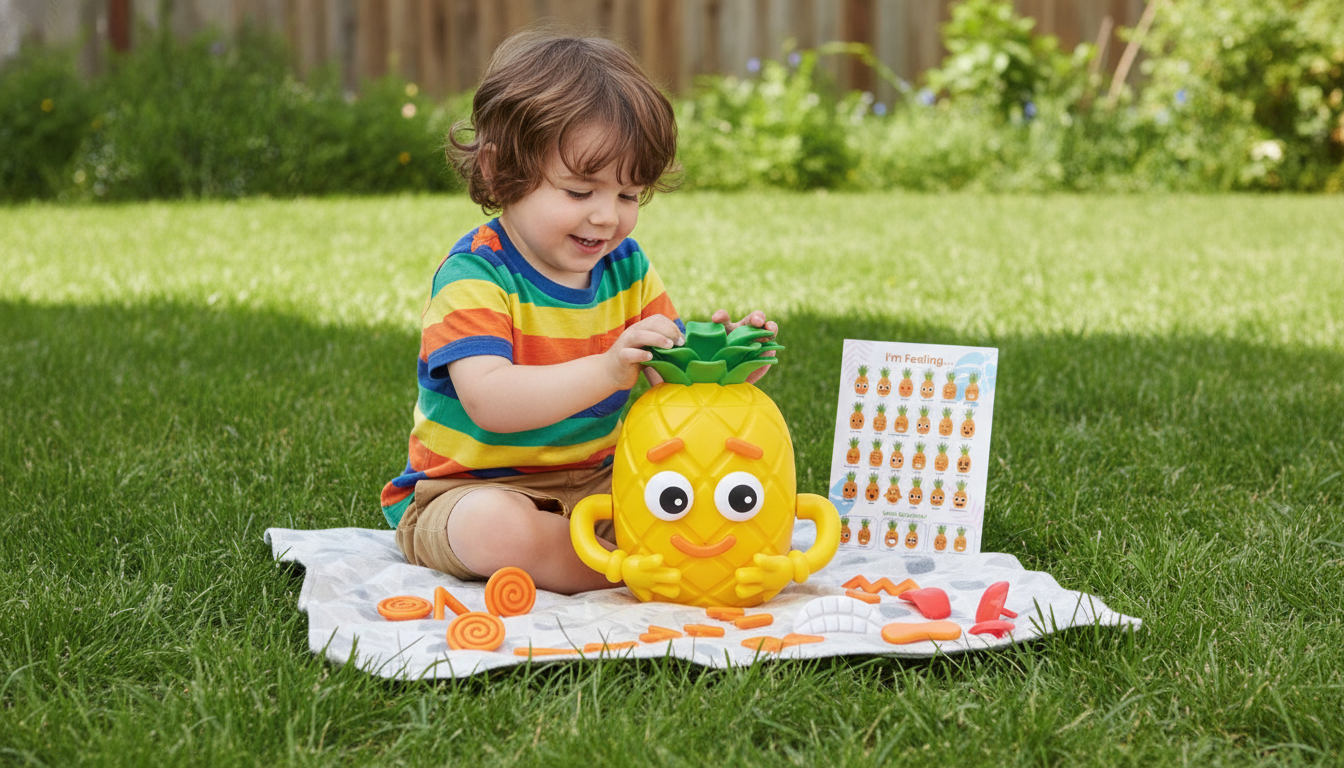
Players create facial expressions with 26 interchangeable pieces on a dual-sided pineapple, depicting contrasting emotions. The toy includes a full-color emotion guide poster and stores pieces in the removable crown. (Amazon)
Who this toy suits
The Learning Resources Big Feelings Pineapple is designed for children ages 3 to 6 years, according to the manufacturer, making it suitable for preschoolers who are beginning to explore and talk about emotions (Amazon listing). Its dual-sided pineapple body and 26 interchangeable face pieces (including eyes, eyebrows, mouths, and accessories) allow children to create a variety of facial expressions. Because the toy contains small parts, it is not suitable for children under 3 years old due to a choking hazard.
This toy may appeal to families and educators looking for a hands-on way to introduce conversations about feelings, or for children who enjoy imaginative play involving characters and emotions.
What children can do and learn
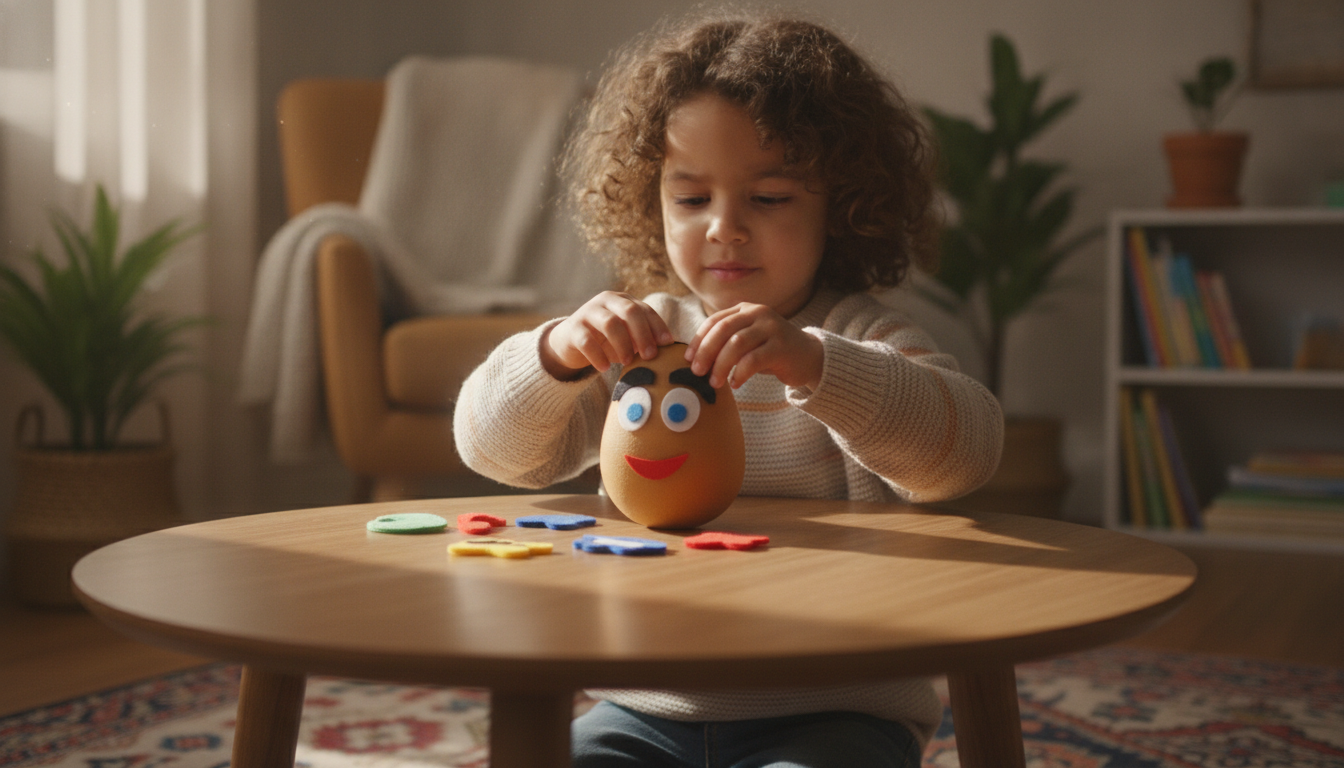
- Build and compare facial expressions. Children can select and attach different facial features to the pineapple, creating expressions such as happy, sad, angry, or surprised on either side. This activity gives children the opportunity to practice recognizing and naming emotions by observing how facial features combine to show different feelings (Amazon listing).
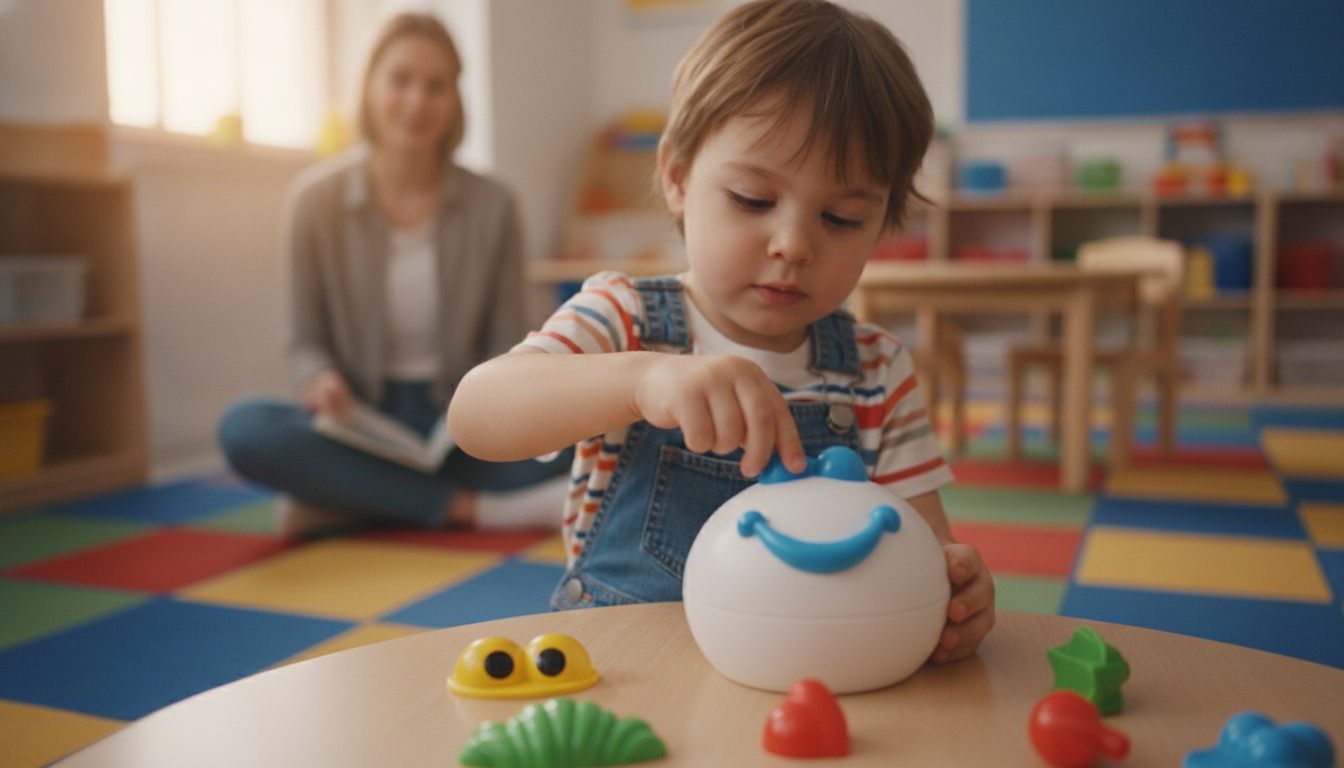
- Practice fine motor actions. Handling and attaching the small face pieces encourages children to use their fingers and hands with precision. General research suggests that play materials requiring manipulation and assembly, such as connecting and arranging small parts, provide opportunities for preschoolers to practice and strengthen fine motor skills (NAEYC, p. 104-107). This is general guidance about fine motor play, not evidence specific to this toy.
- Engage in pretend play with emotions. Children can use the pineapple to act out simple stories or scenarios that match the expressions they create. General research highlights that pretend play with objects and characters helps children explore social roles, express feelings, and practice communication (AAP: The Power of Play). This is general play guidance, not a claim about this specific toy.
Play ideas to try
- Emotion matching. Build one emotion on one side of the pineapple and invite your child to create a different or opposite emotion on the other side. Talk together about how the features change.
- Feelings storytelling. After making a face, invent a short story about why the pineapple feels that way. This can encourage children to use emotional vocabulary and imagination.
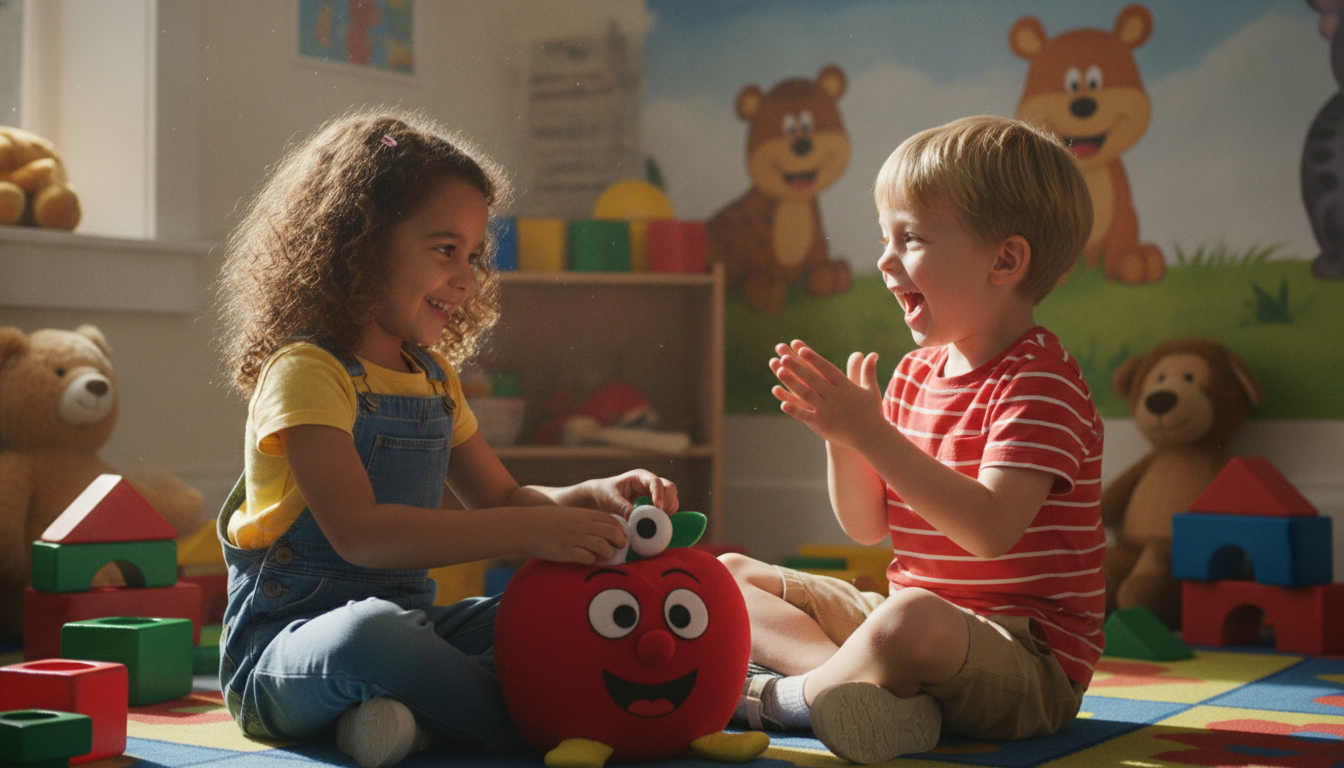
- Expression imitation. Show an expression on the pineapple and ask your child or a group to mimic the face and name the feeling. This can be a playful way to practice recognizing emotions.
(These are optional parent suggestions and not official game modes.)
Before you buy
The set includes 26 face pieces plus the pineapple body and a crown lid for storage (Amazon listing). The manufacturer recommends this toy for ages 3 and up due to small parts. The pieces are made from flexible plastic and are sized for preschoolers' hands. The toy measures approximately 3.7 x 5.3 x 7.6 inches, and the crown lid can be removed to store the pieces inside the pineapple.
Consider whether your child enjoys building faces and talking about feelings, as well as whether they are ready to keep track of small pieces. The dual-sided design is most effective when an adult helps guide discussion about the different emotions.
When another type may fit
If your child is younger than 3 or finds small pieces difficult to manage, simpler sensory toys or plush dolls with sewn-on expressions may be a better fit. For children who prefer broader imaginative play without focusing on facial features, dolls or puppets can offer more open-ended storytelling opportunities.
Sources
- NAEYC. "Preschoolers at Play: Play Materials That Enhance My Fine Motor Skills." General research on fine motor play materials. https://www.naeyc.org/sites/default/files/globally-shared/downloads/PDFs/resources/pubs/preschoolers-at-play-chap-15.pdf
- American Academy of Pediatrics. "The Power of Play: How Fun and Games Help Children Thrive." General research on pretend play and social-emotional learning. https://www.healthychildren.org/English/family-life/power-of-play/Pages/the-power-of-play-how-fun-and-games-help-children-thrive.aspx
- Learning Resources Big Feelings Pineapple product listing, Amazon. https://www.amazon.com/dp/B08PCBDHR3
Research sources above provide general information about play and fine motor skills, not specific evidence for this toy.