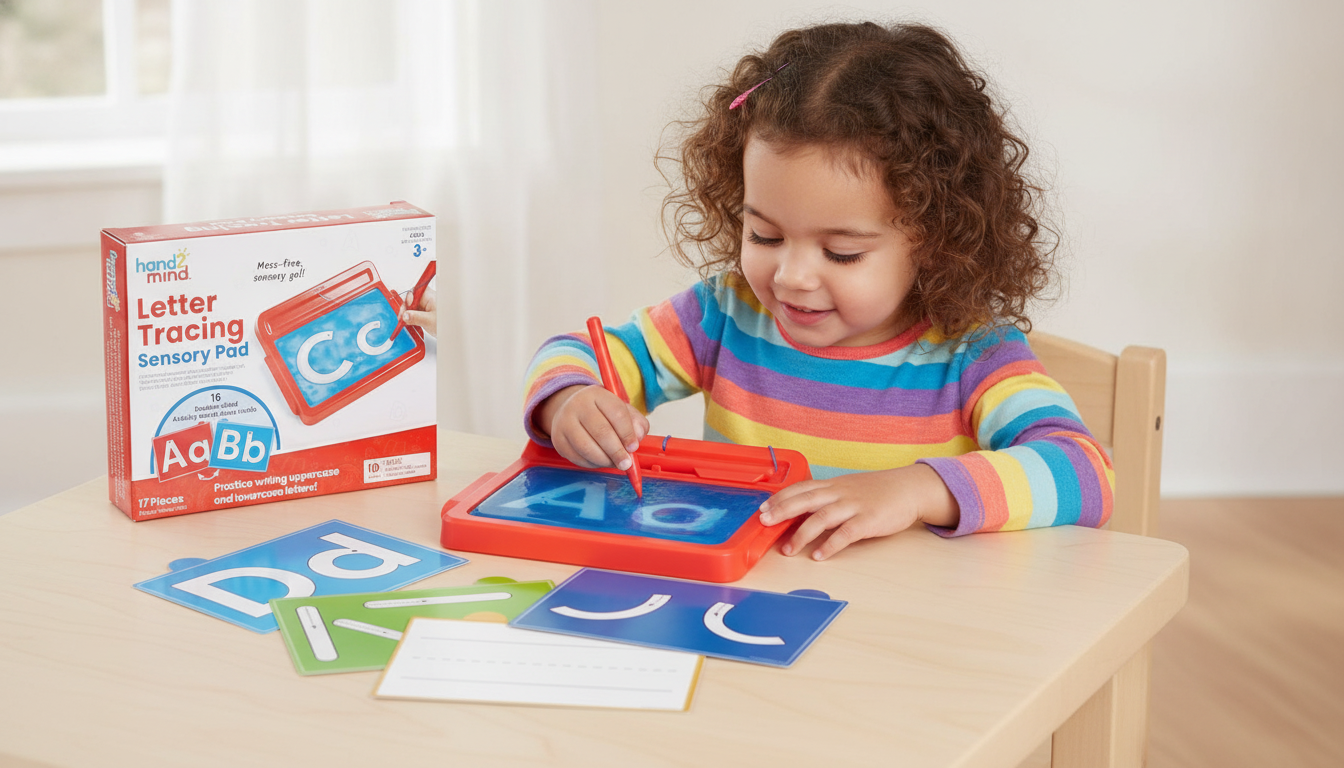
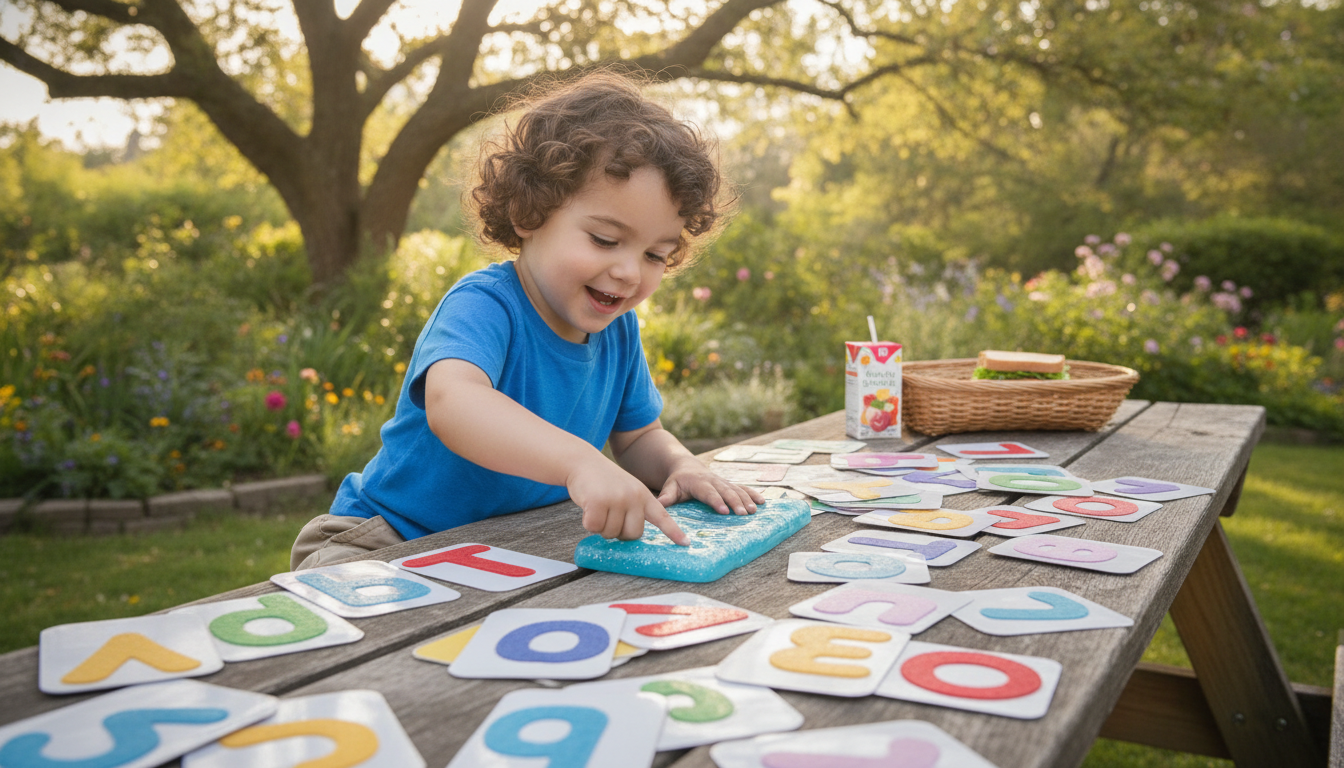
Children trace uppercase and lowercase letters on a gel-filled sensory pad using an attached stylus. The pad includes 16 double-sided reusable activity cards and a guide. The gel inside is securely sealed to prevent messes. See it on Amazon.
Who this toy suits
The hand2mind Letter Tracing Sensory Pad is designed for children ages 3 and up, according to the manufacturer's minimum recommended age. It is suitable for preschoolers and kindergarteners who are beginning to explore letter formation and enjoy tactile, hands-on activities. This product is a good fit for children interested in sensory play, tracing, and early writing practice. It is not appropriate for children under 3 years old.
What children can do and learn
- Trace uppercase and lowercase letters on a sensory gel surface
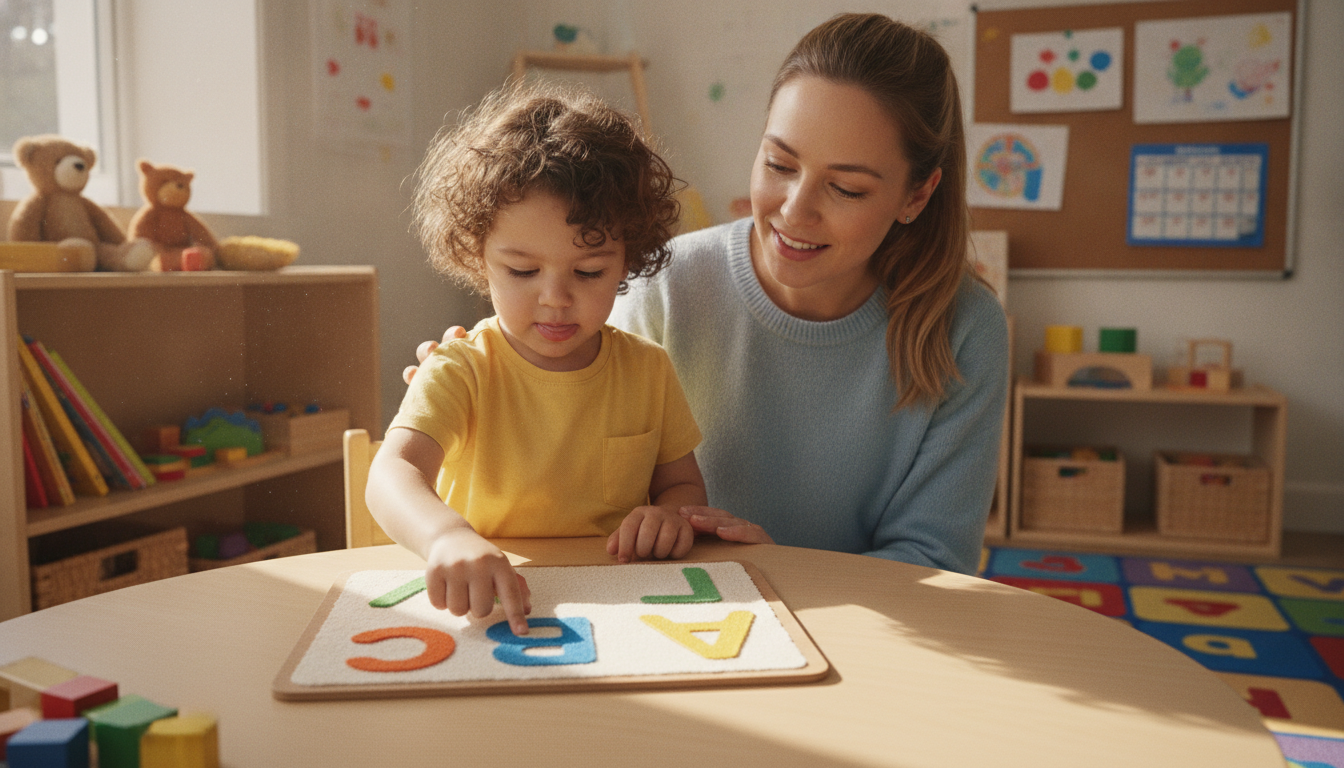
Children use the attached stylus or their finger to trace letters on the gel-filled pad, following paths on reusable activity cards. This activity gives children the opportunity to practice letter recognition and visual-motor coordination by linking the visual appearance of letters with the hand movements needed to form them. General research describes handwriting as involving orthographic coding, fine-motor movement, and visual-motor coordination, and recommends making handwriting a regular part of early literacy instruction for elementary-aged students (University of Iowa, 2016). This is general guidance and does not indicate that this specific toy produces an improvement. - Develop finger dexterity and fine motor control through tracing motions
Guiding the finger or stylus across the gel surface allows children to practice controlled hand movements and finger strength, which are important for writing tasks. General recommendations encourage providing children with a variety of manipulatives and writing implements to support the development of fine motor skills and finger dexterity (NAEYC, 2017). This is general play guidance, not evidence of a specific benefit from this toy. - Practice transferring letter formation skills to pen or pencil
After tracing letters on the sensory pad, children can try drawing the same letters with crayons or pencils, encouraging the transfer of spatial and movement skills to conventional writing tools. General advice suggests that handwriting practice in early childhood can help improve fine motor abilities and visual-motor performance (HealthyChildren.org, 2017). This is general play guidance and not a claim about this specific product.
Play ideas to try
- Letter-by-letter tracing
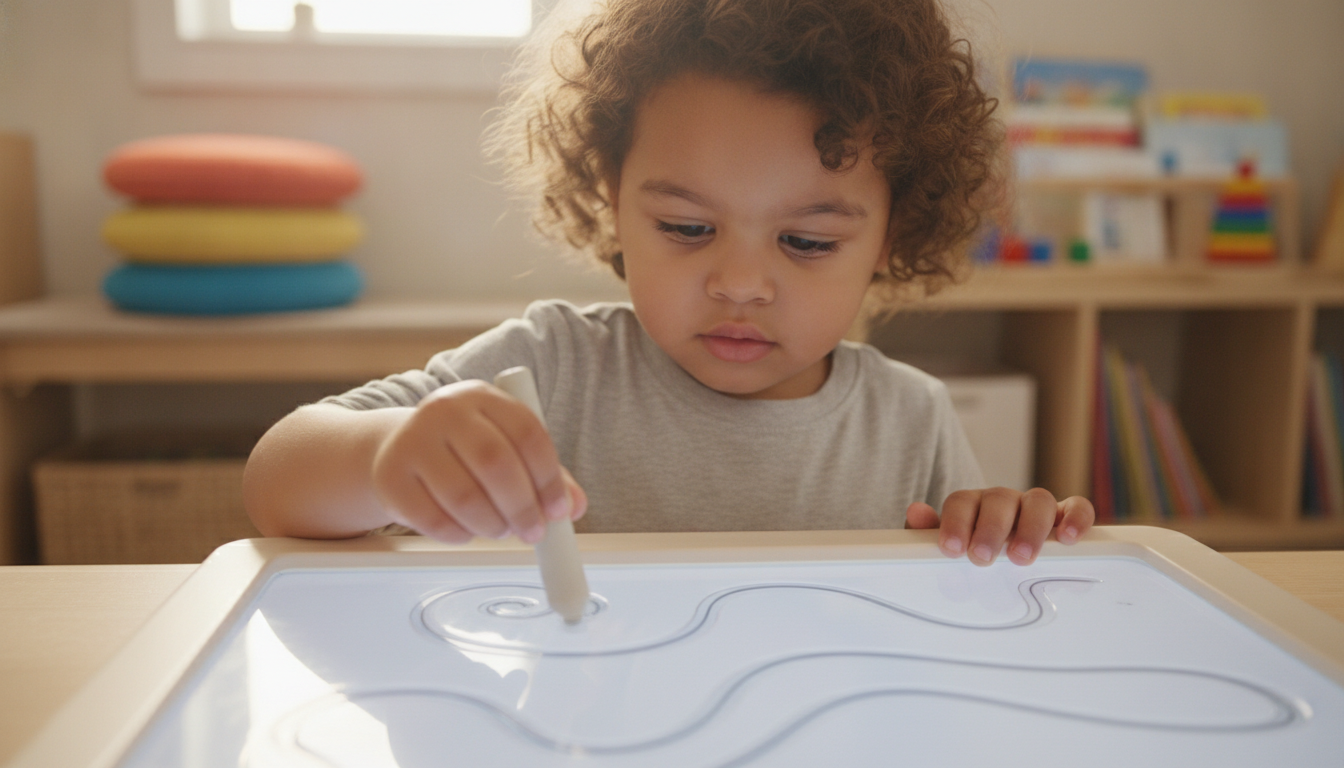
Present a few letter cards and encourage your child to trace each letter slowly with their finger or the stylus while naming the letter or its sound. - Sensory letter search
Mix cards with different letters and have your child find and trace specific letters on the gel pad, turning letter recognition into a sensory game. - Tracing to writing practice
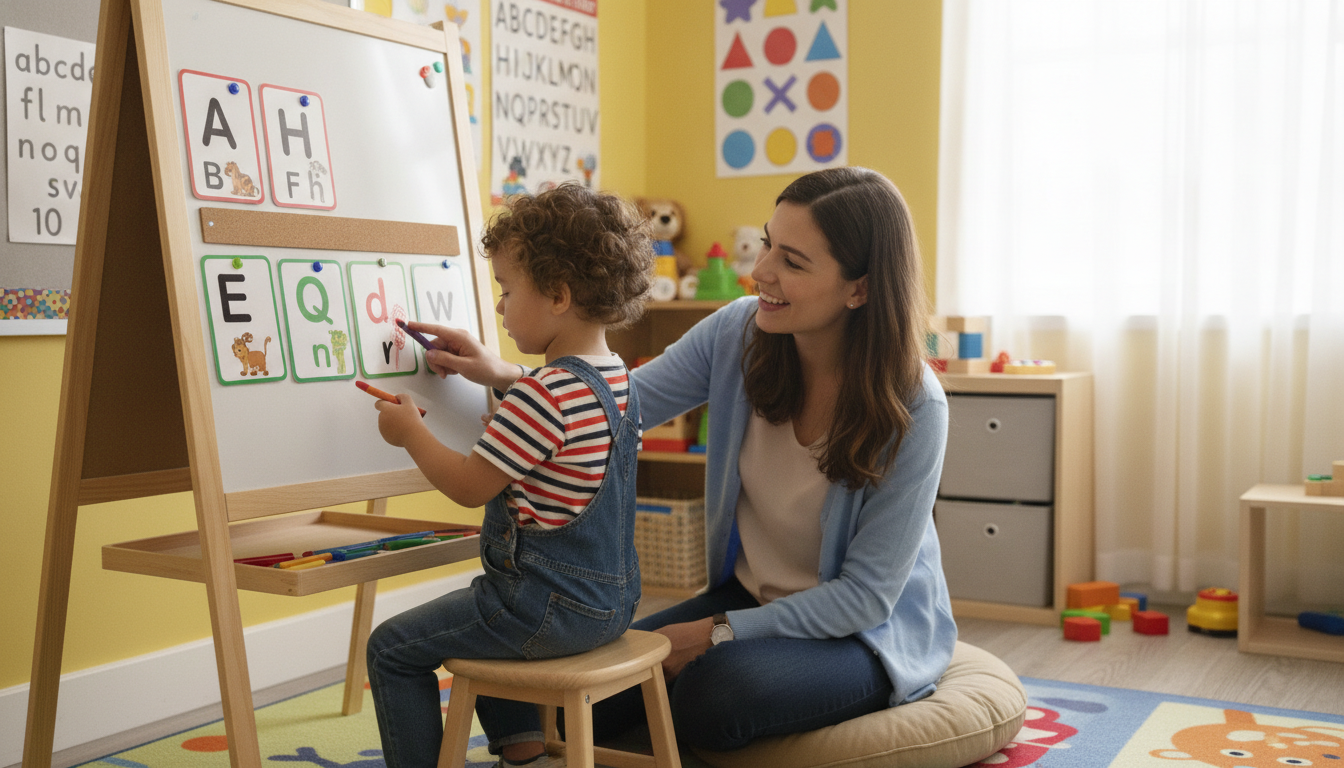
After tracing letters on the pad, have your child write the same letters on paper or a whiteboard to connect tactile tracing with conventional writing.
Before you buy
Consider whether your child is interested in early literacy and tactile sensory activities. The set includes one gel-filled sensory pad with an attached stylus, 16 double-sided reusable letter tracing cards, and a guide. The components are few and manageable, which helps keep pieces organized. The pad is designed for tabletop use in quiet, focused practice or small group activities.
This toy suits homes or classrooms focused on fine motor skill-building and letter formation through sensory play. If your child prefers free drawing, fewer parts, or gross motor activities instead, consider other types of toys.
When another type may fit
For children who enjoy open-ended drawing or creative building more than guided tracing, easel boards, finger paints, or construction blocks might be better alternatives. Families seeking simpler setups with fewer components could consider basic magnetic tracing boards that offer a less complex sensory experience without separate activity cards.
Sources
- hand2mind Letter Tracing Sensory Pad product page: Amazon
- University of Iowa: How to Make Handwriting a Part of Early Literacy Instruction (2016)
https://irrc.education.uiowa.edu/sites/irrc.education.uiowa.edu/files/2023-05/how_to_make_handwriting_part_of_early_literacy_instruction.pdf - National Association for the Education of Young Children (NAEYC): Promoting Preschoolers’ Emergent Writing (2017)
https://www.naeyc.org/resources/pubs/yc/nov2017/emergent-writing - HealthyChildren.org / American Academy of Pediatrics: The Importance of Handwriting in the Digital Age (2017)
https://www.healthychildren.org/English/family-life/Media/Pages/The-Importance-of-Handwriting-in-the-Digital-Age.aspx
*Research citations above provide general play guidance and do not indicate testing or endorsement of this specific product.*