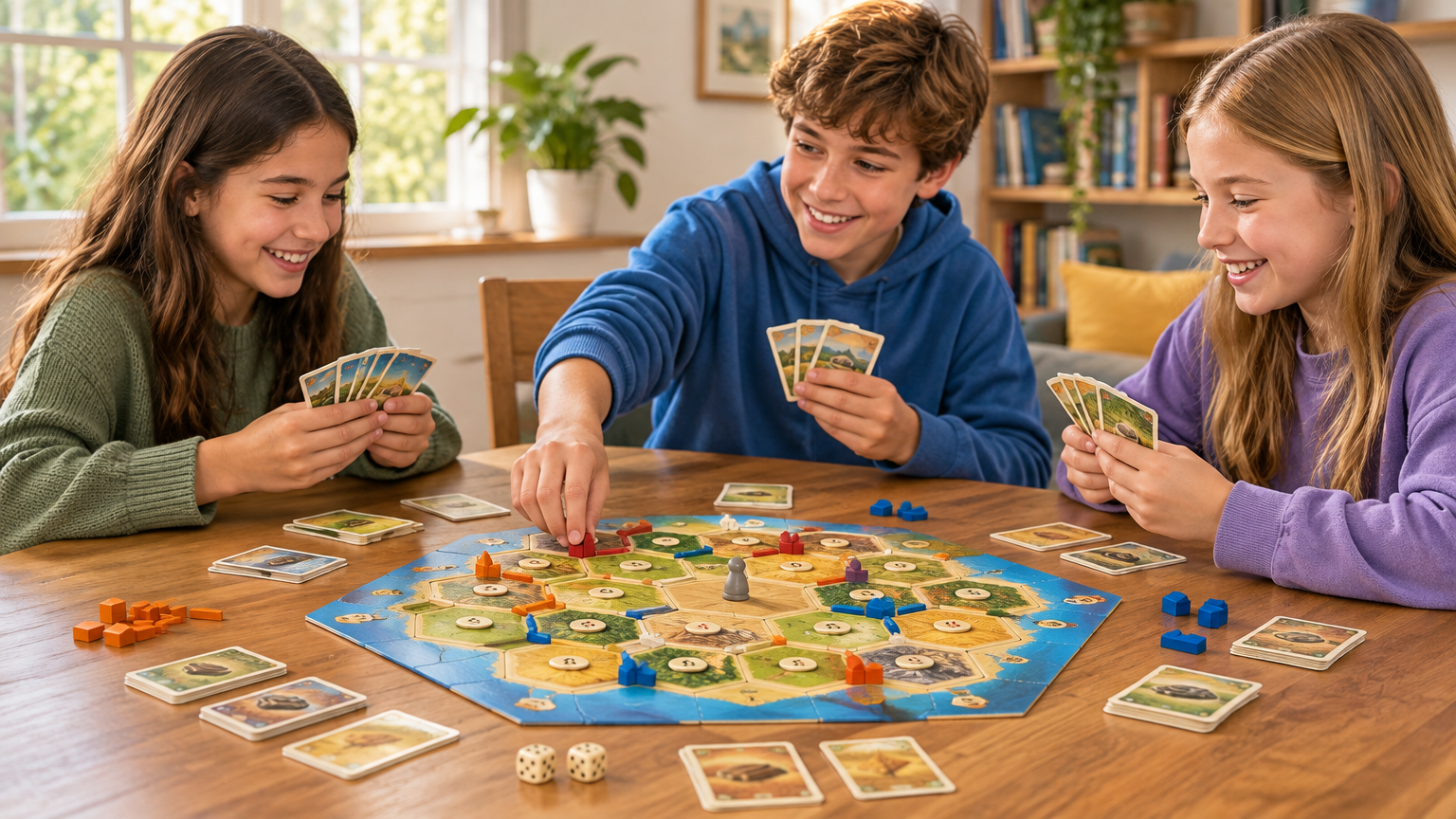
For 3–4 players ages 10 and up, CATAN features a modular hexagonal board. Players gather and trade resources, build roads, settlements and cities, and race to 10 victory points while avoiding the robber. View on Amazon
Who this toy suits

CATAN Board Game (6th Edition) suits children who enjoy choosing building goals, discussing trades and competing over a shared board. The manufacturer specifies ages 10 and up and 3–4 players. Adult help does not lower that minimum age.
Players gather brick, wood, wheat, ore and sheep, then use resources to build roads, settlements and cities while competing to reach 10 victory points. Trading is part of the game, so consider whether your child enjoys making offers and hearing other players decline them. This is competitive play rather than open-ended construction: opponents can block paths, and the robber can disrupt resource plans.
What children can do and learn

- Choose a building goal. A child can decide whether to work toward a road, settlement or city, then identify the resources needed using the included rules and player aids. Harvard’s strategy-game activity guidance for ages 7–12 describes strategy games as opportunities to practise planning moves ahead. Here, the observable action is choosing a next build and considering how to obtain its resources—not a promised improvement beyond play.
- Offer and compare trades. Players can name a resource they want, propose an exchange and consider what they would give up. This provides an opportunity to explain an offer and decide whether an exchange fits a current building goal. A proposed trade need not suit both players, and another player may refuse it.
- Consider a different plan. When an opponent blocks a path or the robber disrupts resources, a child can look for another building or trading option. Harvard’s guidance on strategy games describes adjusting plans in response to opponents’ moves. The relevant practice here is identifying another available choice, not a guaranteed wider benefit.
Play ideas to try
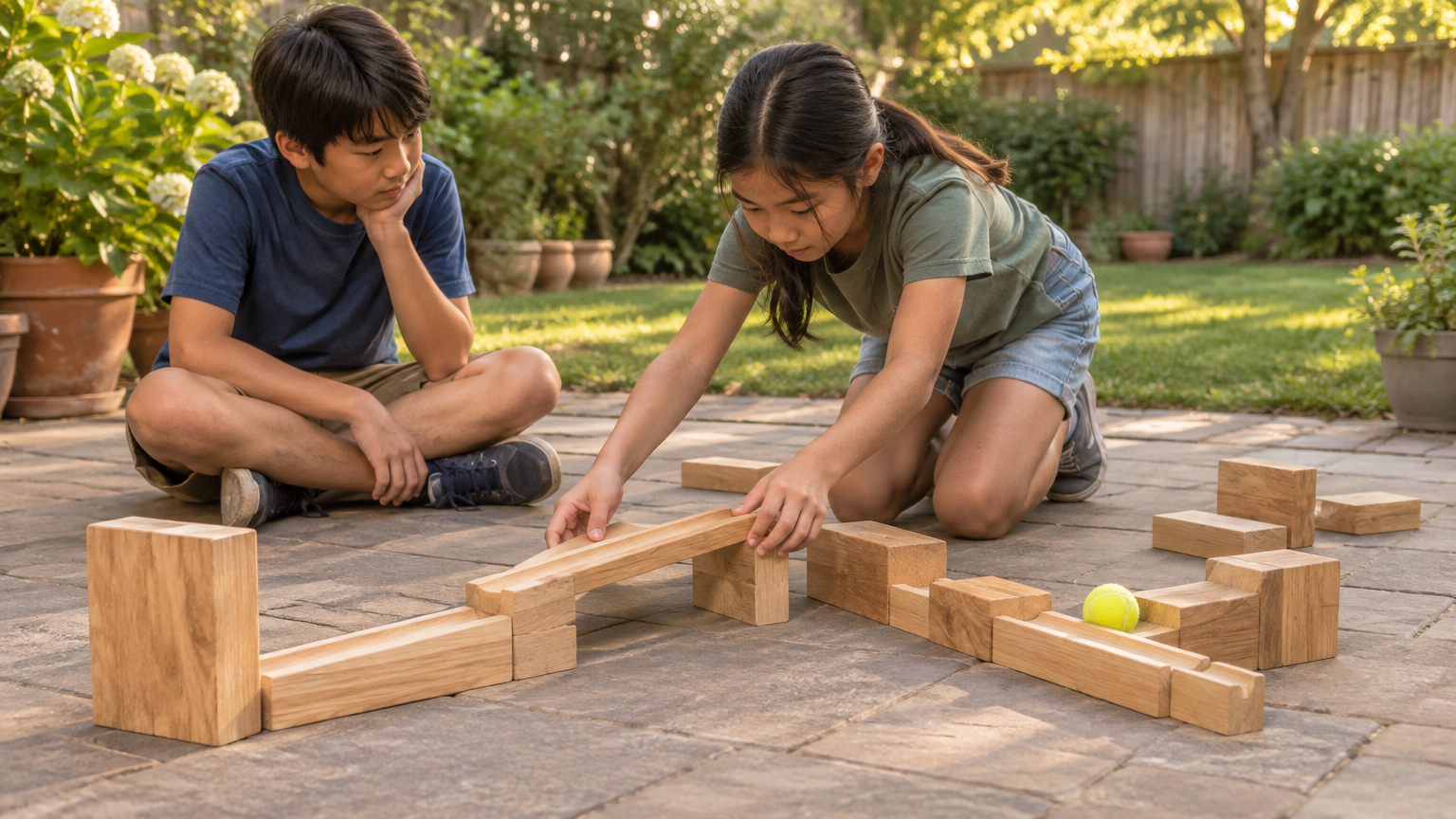
These are optional parent suggestions, not additional official game modes. Follow the included rules throughout.
Name the next build. Invite a child to identify one intended road, settlement or city and check its resource requirements in the rules or player aid. Keep the invitation optional so players can keep their plans private.
Explain one offer. When a child proposes a trade, invite them to say what they need and what they can offer. Keep the explanation brief, and leave everyone free to accept or decline according to the rules.
Look at the island. Before beginning, examine the modular terrain layout together. Ask which resources are near possible settlement locations. Use the setup instructions rather than inventing a new arrangement or changing placement rules.
Before you buy
Check your usual group size first: the supplied game supports 3–4 players. The CATAN 5–6 Player Extension, sold separately, expands it to 5–6 players.
The listed contents include 19 terrain hexes, 6 sea frame pieces, 18 number discs, 4 player aids, 2 bonus victory point tiles, 96 wooden player pieces in four colors, 2 card trays, 2 dice, 120 cards and rules. Consider whether your family wants to sort and put away this number of components after play.
The supplied facts do not establish a playing time or an assembled-board footprint. If either is important to your household, confirm it before buying rather than treating the listing’s item dimensions as the space required for play.
When another type may fit
An age-appropriate construction set may fit a child who mainly wants to build freely without trading or competitive rules. For a smaller group, consider a game explicitly designed for your player count. If component sorting is a concern, look for a card game with fewer pieces.
Sources
Research below provides general play guidance, not testing or endorsement of this specific game.