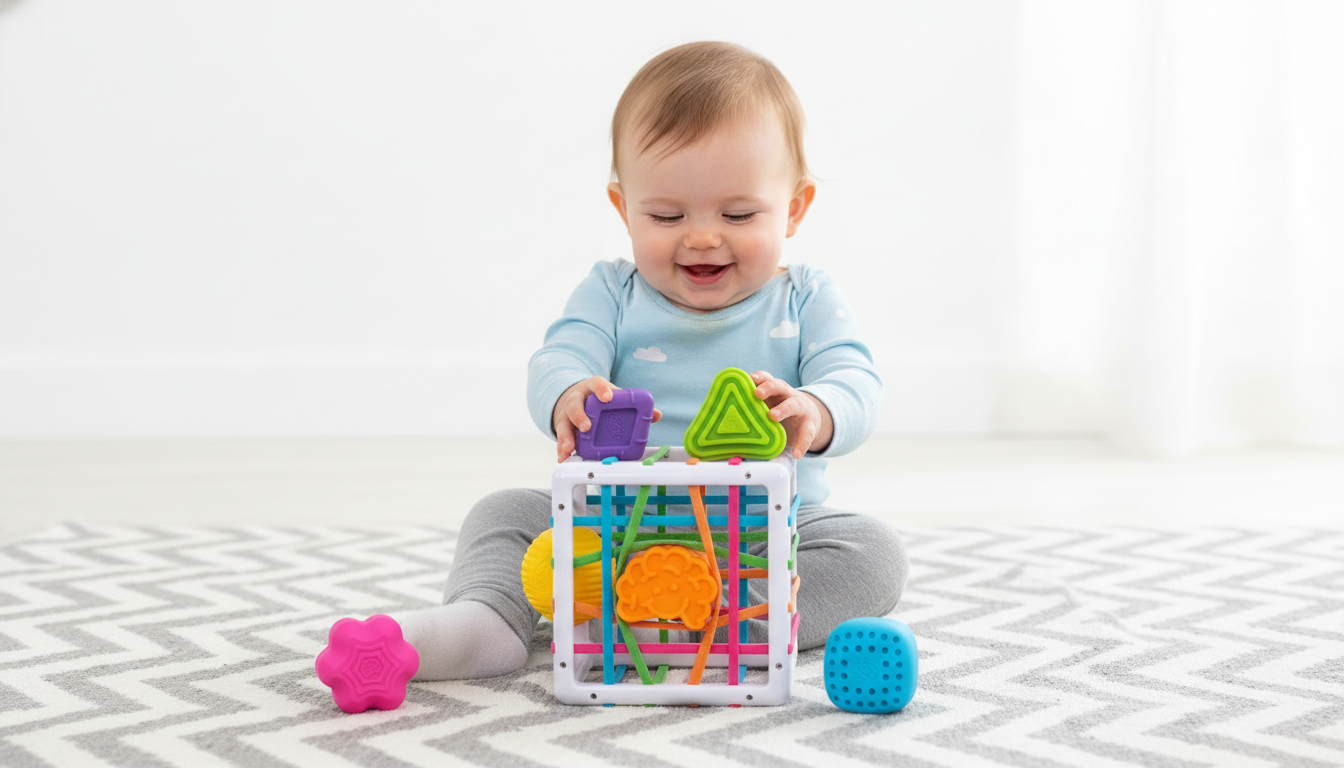
Children push six chunky, textured shape blocks through the cube’s rainbow-colored elastic bands and pull them back out. Includes one 5.5-inch cube and six blocks. For ages 10 months and up. View on Amazon
Who this toy suits

The Fat Brain Toys InnyBin Shape Learning Sensory Toy suits babies ages 10 months and older who enjoy handling objects, exploring textures, and putting things in and taking them out. Its central activity is pushing six chunky shape blocks through a cube’s rainbow-colored elastic bands, then reaching in to pull them back out.
Follow the manufacturer’s 10-month minimum; a broader shopping age category should not replace that recommendation. Children can explore the pieces without knowing their color or shape names.
This is an elastic-sided container toy rather than a traditional shape sorter with a matching opening for each piece. It may fit families looking for open-ended handling and retrieval rather than a task with one correct hole for each block.
What children can do and learn
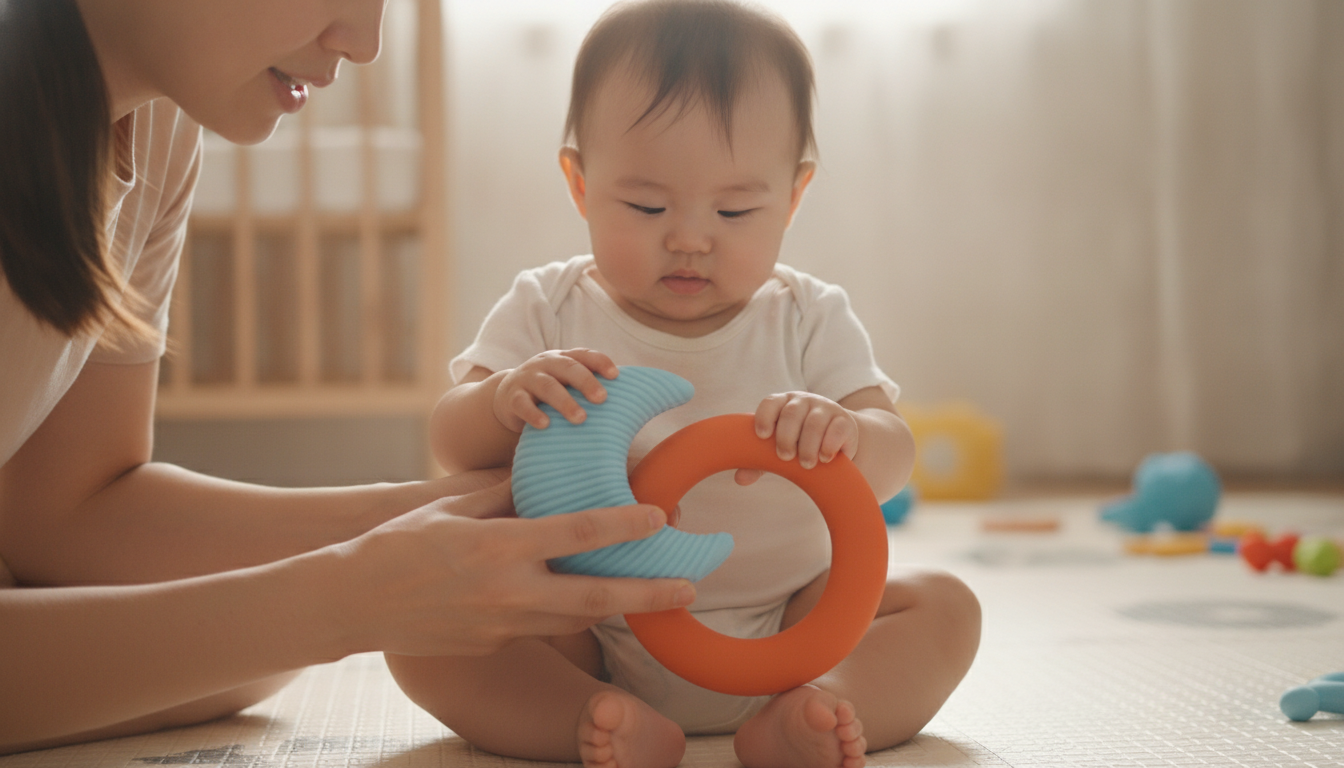
- Handle, push, and retrieve blocks. Holding a block, pressing it between the bands, and pulling it out offer opportunities to practice those hand actions. In its general guidance for one-year-olds, the CDC recommends playing together with blocks and other toys that encourage babies to use their hands.
- Explore different surfaces. Each brightly colored shape has a distinct texture for fingers to investigate. Children can turn and feel the pieces while an adult describes what they are touching. The AAP’s general discussion of object exploration at 8–12 months describes babies investigating properties such as shapes, textures, and sizes through handling objects.
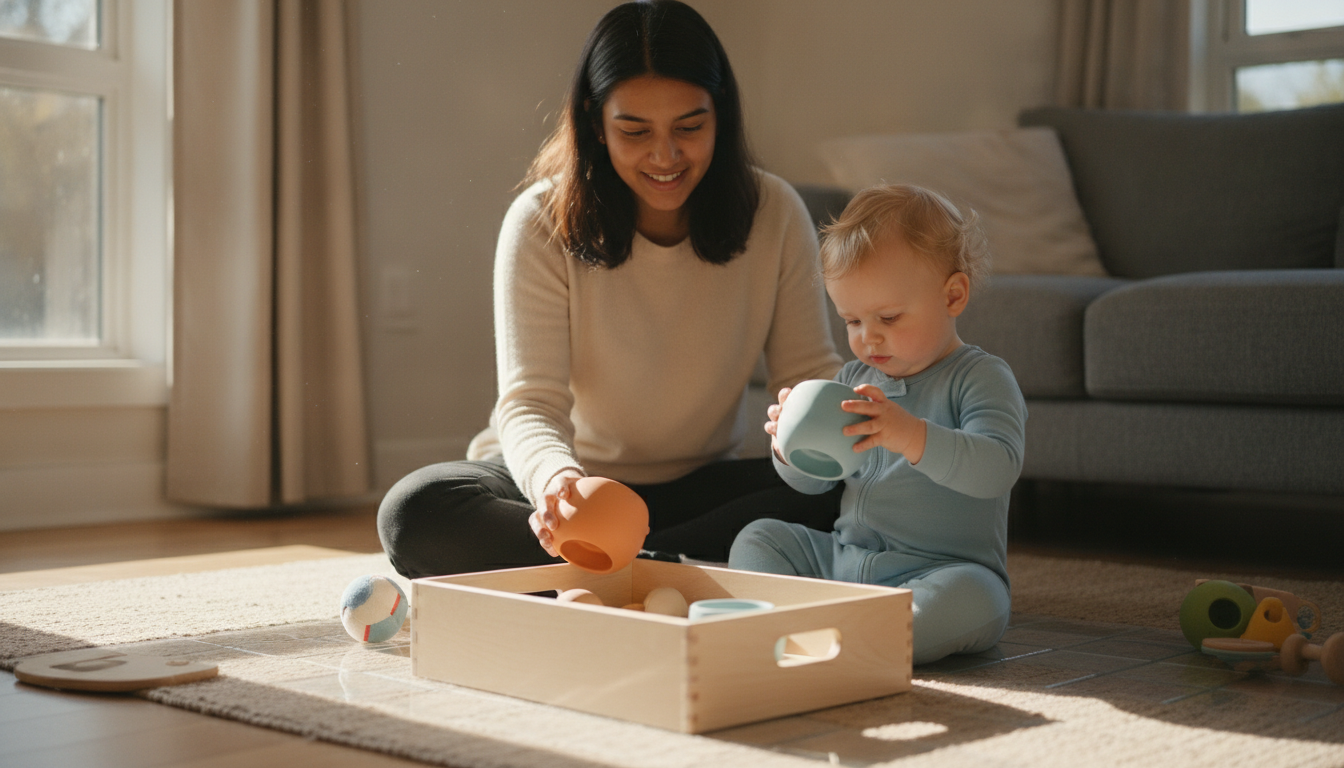
- Repeat an in-and-out action. Children can put a shape inside and try to remove it, changing where they grip or how they move it through the bands. The CDC lists putting something in a container, such as a block in a cup, as a one-year milestone. That milestone describes a simpler container action; it does not mean every 10-month-old will manage this elastic-sided cube independently.
Play ideas to try

These are optional parent suggestions, not additional manufacturer rules or official game modes. Let your child choose whether to continue rather than treating successful insertion or retrieval as a test.
- Start with one shape. Slowly demonstrate pushing a block through the bands, then offer it to your child. Set the other five aside so there is just one object to follow.
- Offer a retrieval turn. Put one block inside the cube and invite your child to pull it out. If they want help, demonstrate the action again and leave room for another attempt.
- Explore two textures. Offer two shapes to handle in turn. Describe their colors and surfaces, then let your child choose which one to push into the cube. There is no need to ask for a correct color or shape name.
Before you buy
The Amazon listing specifies one cube and six shape blocks. The cube measures 5.5 × 5.5 × 5.5 inches, and each shape measures approximately 2 inches. These are the stated toy dimensions, not packaging measurements.
The listing also states that the toy is made without BPA. That statement does not establish the material of every component or how easily a particular child will retrieve the blocks.
Allow room for the cube and loose shapes during play. There are seven components to gather afterward, which is worth considering if you prefer toys with fewer separate pieces. The activity involves both pushing pieces in and pulling them out, so consider whether that repeated handling matches your child’s current interests.
When another type may fit
For a child mainly interested in matching shapes to corresponding holes, an age-appropriate traditional shape sorter may be a closer fit. If fewer loose pieces are the priority, consider an age-appropriate one-piece textured activity toy instead.
Sources
The research sources provide general play guidance, not testing or endorsement of this toy or evidence that it produces developmental improvements.