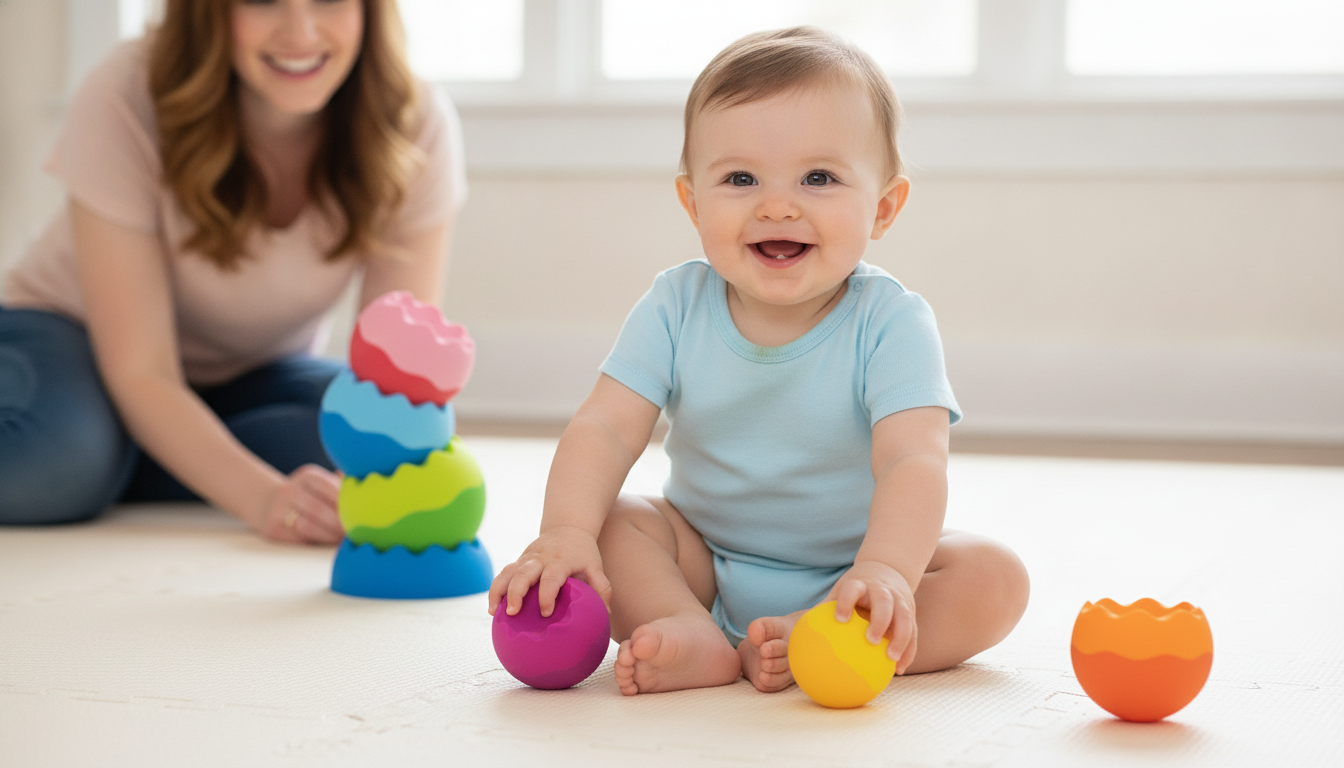
Includes 6 weighted spheres sized big to small and a stacking base. Stack, topple, spin, wobble, balance, tilt and roll the spheres. For ages 6 months and up. View on Amazon
Who this toy suits
The Fat Brain Toys Tobbles Neo Baby Stacking Toy suits children interested in handling objects, watching movement and toppling small stacks. It comes with six weighted spheres, sized big to small, and a stacking base. Documented actions include stacking, toppling, spinning, wobbling, balancing, tilting, wiggling and rolling.
The listed manufacturer minimum is 6 months and older. That is an age recommendation, not an expectation that a six-month-old will build a tower. A child can explore one piece or watch an adult make it wobble before becoming interested in placing pieces together. Choose the activity around what your child is trying to do rather than making a complete stack the goal.
What children can do and learn

- Reach for and handle a sphere. Offering a piece within comfortable reach creates an opportunity to practise reaching and grasping. The CDC’s six-month milestones page identifies reaching to grab a wanted toy as something most babies can do by that age; it does not say babies should already be able to stack.
- Reach toward and topple a low stack. An adult can place two pieces together and let the child reach toward or knock them down. The AAP’s baby play suggestions recommend stacking blocks for babies to reach for and bat at. That is a general example of this kind of play, rather than a finding about Tobbles Neo.
- Place, nudge and watch. Children can try setting one sphere on another, adjusting its position or pushing a piece to see it wobble or spin. These are observable opportunities to practise placement and explore movement, without requiring a particular result or claiming a developmental gain.
Play ideas to try

These are optional parent suggestions, not additional manufacturer game modes. Use a clear floor area, stay nearby and stop when your child loses interest.
- Wobble and watch. Set one sphere on the floor and give it a gentle nudge. Pause so your child can watch, then leave room for them to try touching or nudging it.
- Build two, topple two. Make a low, two-piece stack on the base. Invite your child to reach toward it or knock it down, then rebuild if they want another turn.
- Try another position. Offer two spheres and demonstrate placing one on the other. Let your child change the placement or tilt. If stacking is not interesting yet, return to exploring a single piece.
Before you buy

Check that you want an open-ended stacking toy rather than a game with a fixed objective. The weighted spheres and their movement are central features; play need not follow a prescribed sequence.
There are seven components to gather: six spheres and one base. The largest sphere measures 4 inches in diameter. That measurement does not establish the size of the other pieces or the complete set’s storage footprint. Allow clear floor space for rolling and toppling.
The listing specifies wipe-clean care. Check the current package for care directions and safety warnings before use, and follow any applicable age restriction; supervision does not override one.
When another type may fit
A one-piece activity toy may suit a household wanting fewer loose components. A sturdy board book is another option for a child more interested in pictures and shared stories. Choose Tobbles Neo when moving, balancing and toppling separate pieces better matches the play you want to offer.
Sources
Research sources provide general play guidance, not testing or endorsement of this toy.