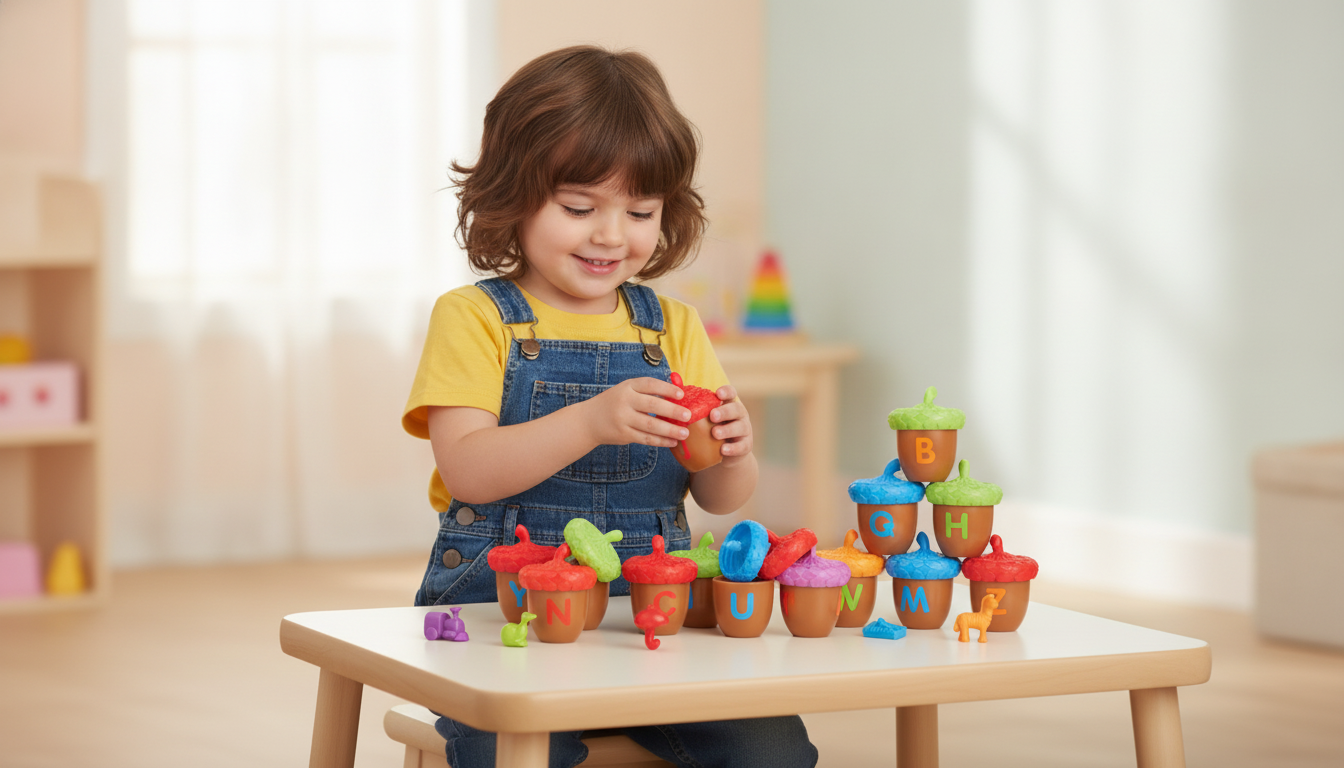
Kids twist, open and match acorns, sort by color and find mini objects inside. The 78-piece set features uppercase and lowercase letters and is for ages 3+. View on Amazon
Who this toy suits
The Learning Resources Alphabet Acorns Activity Set is for ages 3 and up. It suits children who enjoy opening containers, discovering miniature objects, matching letters and sorting colors. The listing describes uppercase letters on the outside of each acorn, matching lowercase letters inside and miniature objects associated with beginning sounds.
Children do not need to know the alphabet before exploring the set. An adult can name a letter or object while the child handles the pieces. Children who already recognize some letters can look for uppercase and lowercase partners or talk about the objects’ beginning sounds.
Choose it for hands-on matching and letter exploration, rather than as a reading course or a promise of reading progress. The main buying question is whether your child enjoys these particular actions, not simply whether a toy is labelled educational.
What children can do and learn

- Twist, open and reassemble. Children can handle the acorn parts, open them to find miniature objects and put them together again. These are opportunities to practice gripping, turning and positioning pieces. NAEYC’s guidance on fine-motor play materials recommends varied experiences using the wrists, hands and fingers, including opening containers and connecting or separating materials.
- Match letters and sort colors. Children can compare uppercase and lowercase forms and group acorn pieces by color. An adult can name the letters while the child looks for a match, or leave the focus on sorting. These are observable activities offered by the set, without a claim that completing them guarantees a learning gain.
- Name objects and explore beginning sounds. Children can open an acorn, identify its miniature object and say the word with an adult. NAEYC’s everyday literacy guidance recommends playful exploration of words that begin with the same sound and conversations about sound–letter connections. Use the objects as prompts for that conversation, supplying a name when a child does not recognize one.
Play ideas to try

These are optional parent suggestions, not additional manufacturer game rules.
Start with a few matches. Set out three or four acorns and separate their parts. Invite your child to put them together again, using colors and checking the letters together. Offer a matching part if the selection feels overwhelming.
Discover and name. Let your child choose an acorn, open it and name the object inside. Say the word together and draw attention to its first sound. You can suggest another word beginning with that sound; there is no need to make it a quiz.
Sort, then rebuild. Mix a small selection of acorn parts on a clear surface. Invite your child to make color groups, then reassemble the acorns. Finish by putting the miniature objects and acorn parts away together.
Before you buy

The listing specifies 78 pieces. Consider where you will spread out the parts and how you will keep them together between sessions. A clear tabletop or floor area can make separated pieces easier to see. You can begin with a small selection rather than putting everything out at once.
The minimum age is 3 years: this set is not appropriate for children under 3, and supervision does not lower that age requirement. Plan to keep the miniature objects and other pieces out of younger siblings’ reach.
The listing identifies one player. Adult conversation can accompany a child’s exploration, but this guide does not assume competitive, cooperative or other formal group-game rules.
When another type may fit
An alphabet board book may suit a child who prefers pictures and shared conversation, or a household wanting fewer separate pieces. A building toy may be a better fit for a child mainly interested in construction rather than opening containers and matching letters. Choose any alternative according to its own age guidance.
Sources
The research below provides general play guidance, not evidence that this specific toy produces improvements or has been tested or endorsed by the sources.