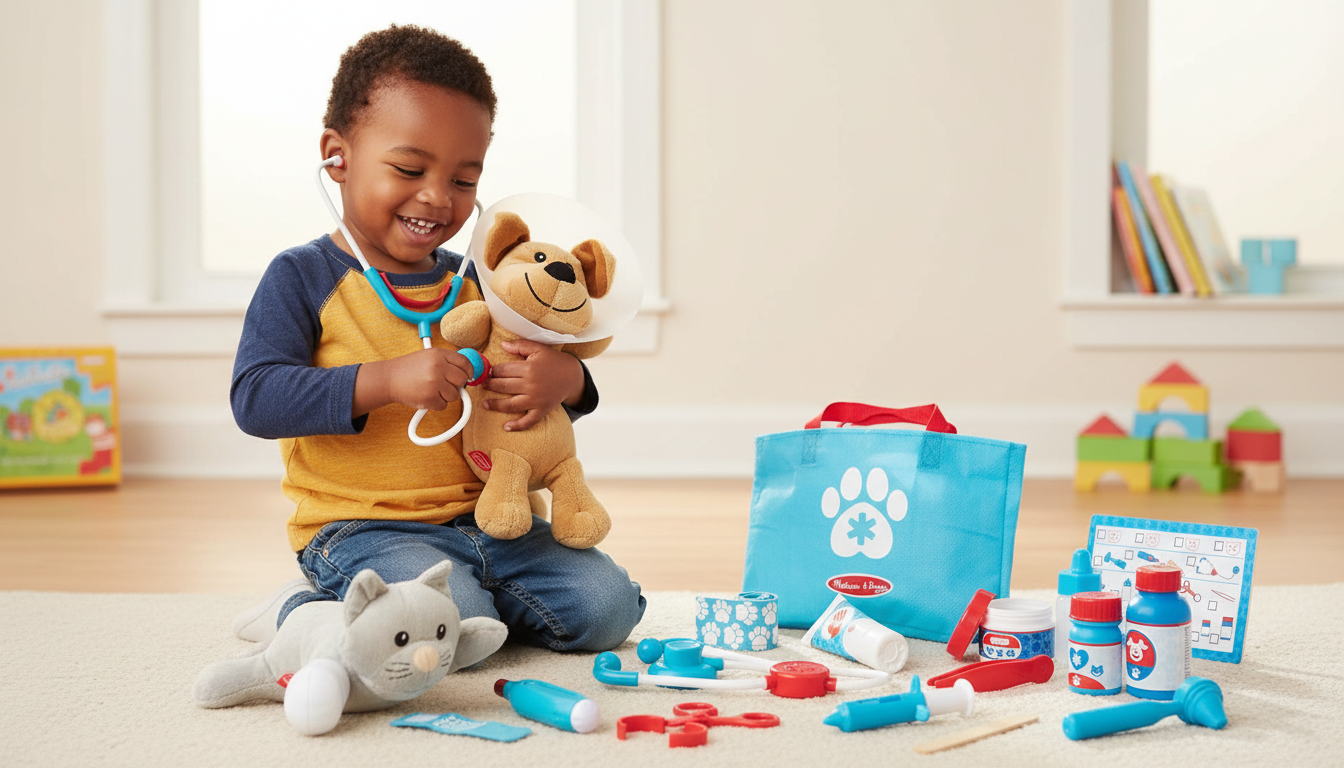
This 24-piece set includes a plush dog and cat, stethoscope, thermometer, syringe, ear scope, tweezers, bottles, and a reusable checklist. Children examine plush pets, give pretend treatments, and organize pieces in a tote. Amazon
Who this toy suits
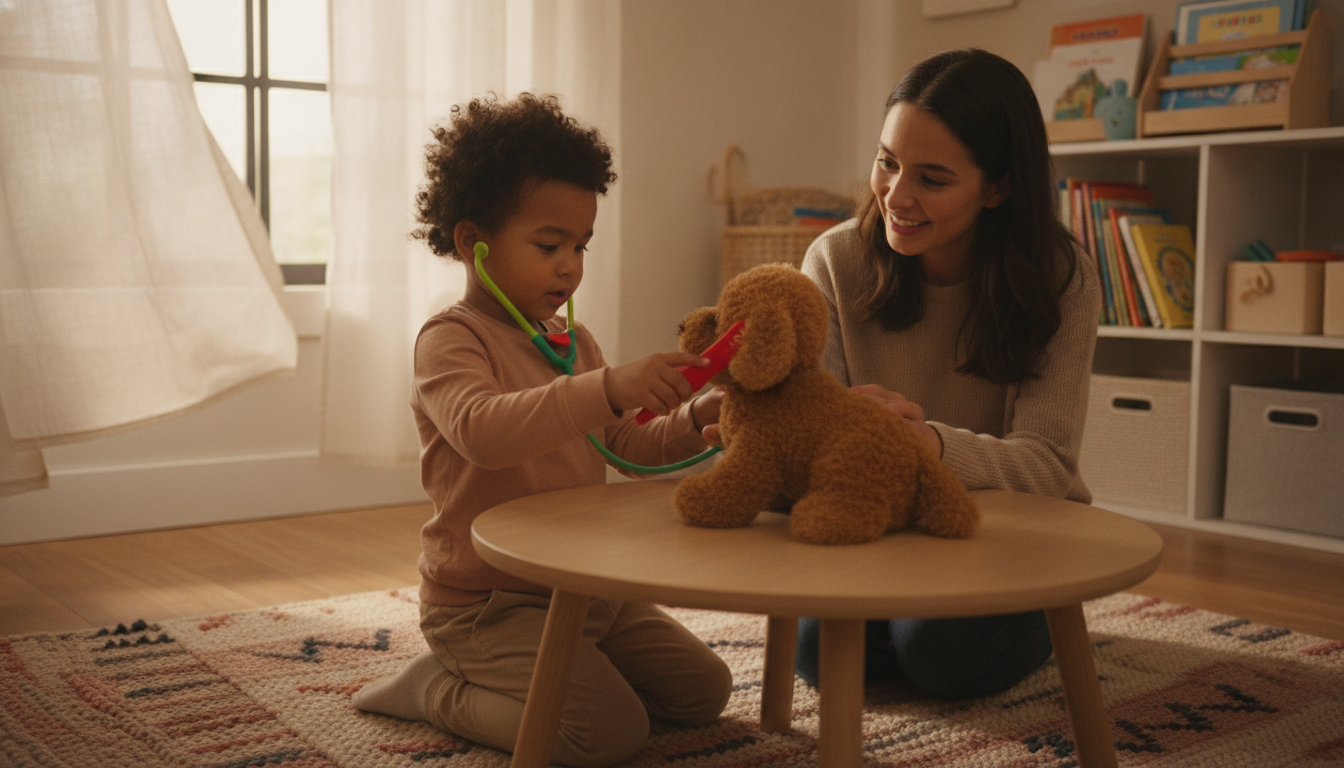
The Melissa & Doug Examine and Treat Pet Vet Play Set is designed for children ages 3 and up, according to the manufacturer. It is a good fit for preschoolers who enjoy animals, imaginative role play, and exploring social roles such as caring for pets. Children who like pretend scenarios involving caretaking or veterinary themes may find this set especially engaging. Due to the presence of small parts and the complexity of some tools, it is not suitable for children under 3 years old.
What children can do and learn

- Pretend veterinary care: Children can use the included stethoscope, thermometer, syringe, ear scope, tweezers, and other tools to examine and treat the plush dog and cat. This encourages make-believe play, where children can take on different roles and express their creativity. General research suggests that pretend play helps children explore social roles and supports communication and creativity, but this is general guidance and not specific to this toy (American Academy of Pediatrics).
- Practice cooperation and turn-taking: When playing with others, children can assign roles such as veterinarian, pet owner, or animal, and take turns using the tools. Research describes that group pretend play provides opportunities for children to practice sharing, negotiating, and communicating, though this is general play advice and not a result of testing this product (American Academy of Pediatrics).
- Manipulate small tools: Handling the syringe, tweezers, and other accessories gives children a chance to practice gripping and precise finger movements. General research recommends providing play materials that allow children to use their hands and fingers in different ways to support fine motor skill practice, but this is not a guarantee of improvement from this specific set (NAEYC).
Play ideas to try

- Veterinarian Checkup Routine: Children can perform a pretend checkup on the plush dog or cat, using the stethoscope, thermometer, and ear scope, and then mark their findings on the reusable checklist.
- Role-Playing Consultation: In a group, children can assign roles such as veterinarian, pet owner, or animal. They can discuss symptoms, choose tools, and take turns treating the plush pets.
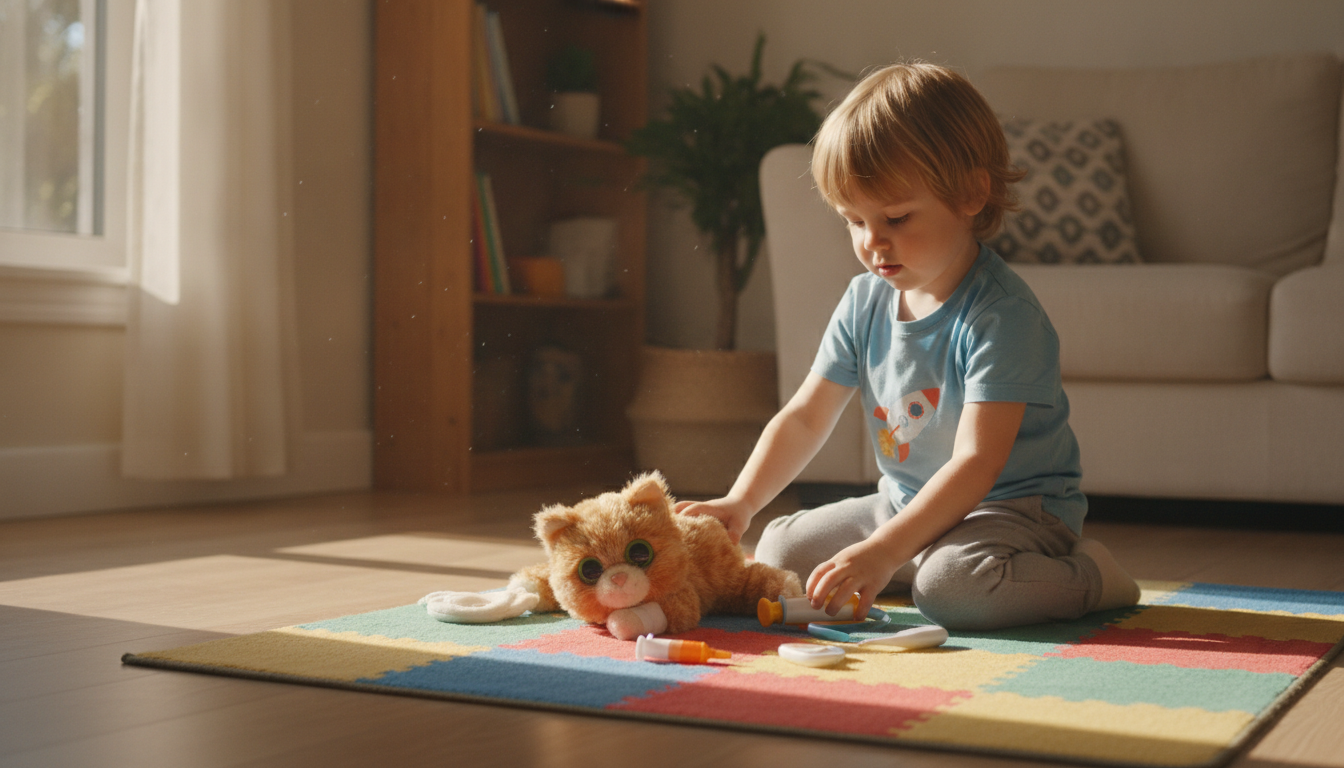
- Emergency Care Scenario: Set up a pretend emergency for one of the plush animals. Children can use the syringe, bandages, cast, paw clamp, and recovery cone to care for the pet, organizing and handling the different tools as part of the scenario.
(These are optional parent suggestions and not official game modes.)
Before you buy
This set includes 24 pieces: a plush dog and cat, stethoscope, thermometer, syringe, ear scope, tongue depressor, tweezers, three bottles with lids, tub with lid, tube, reusable checklist, storage tote, two bandages, cast, paw clamp, and recovery cone. The presence of small parts means it is not suitable for children under 3 years old. Children may need some initial guidance to understand the purpose of each tool and how to use the checklist. The set is designed for imaginative, open-ended play and does not include electronic features or sound effects.
When another type may fit
If your child prefers toys with fewer pieces, more physical activity, or simpler role play, consider alternatives such as basic doctor kits or toys focused on a single activity. These may be easier to clean up and manage, especially for younger children or those who are less interested in animal care themes.
Sources
- The Power of Play: How Fun and Games Help Children Thrive, American Academy of Pediatrics
- Pretend Play: Ways Children Can Exercise Their Imagination, American Academy of Pediatrics
- Preschoolers at Play: Play Materials That Enhance My Fine Motor Skills, NAEYC
- Melissa & Doug Examine and Treat Pet Vet Play Set product listing on Amazon
*Research sources above provide general guidance about play and skill practice, not specific evidence for this product.*