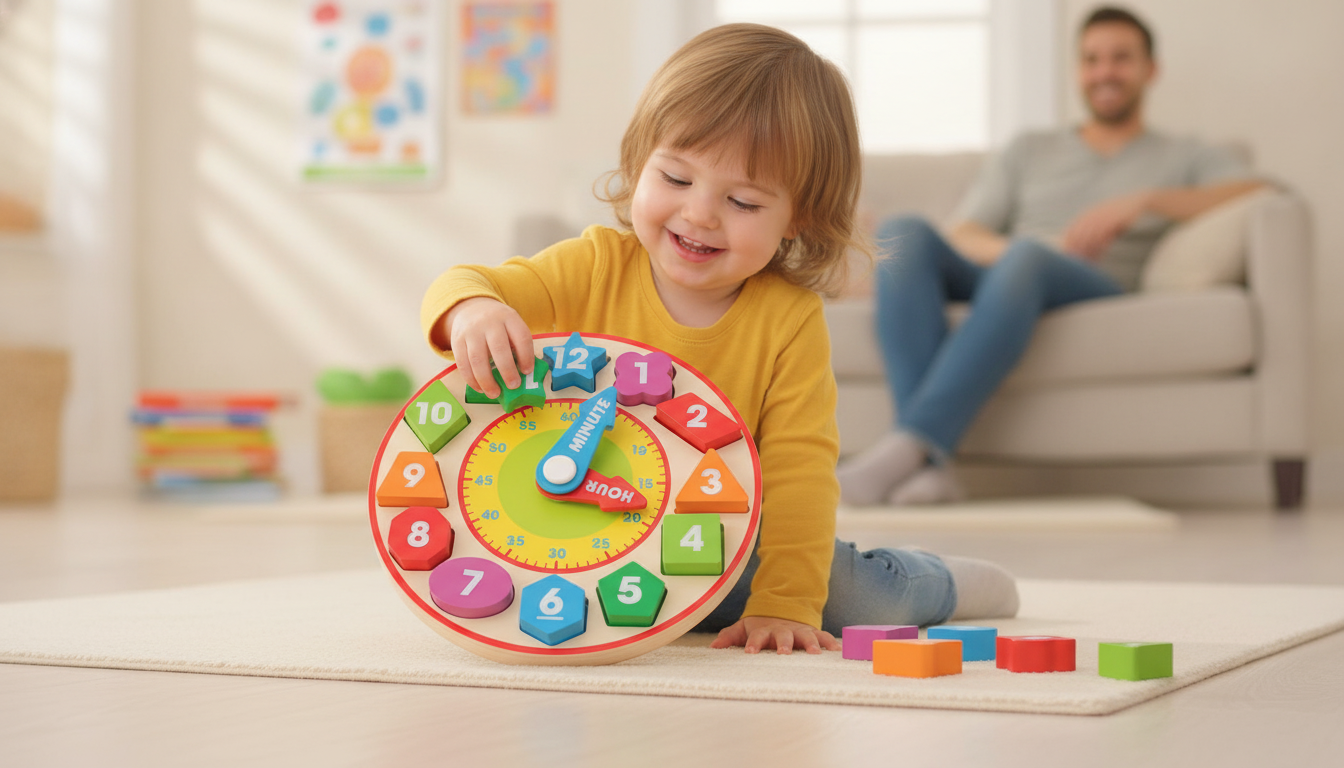
Wooden clock includes 12 shaped number pieces that fit into recessed wells and color-coded minute and hour hands that rotate. Players match colors, sort shapes, and turn the hands to explore the clock face. Amazon
Who this toy suits

The Melissa & Doug Shape Sorting Clock Wooden Educational Toy is designed for children ages 3 and up, with a manufacturer-recommended range of 36 months to 7 years (Amazon listing). It is well-suited for preschoolers and early elementary-age children who enjoy puzzles, shape sorting, and exploring basic concepts of time, numbers, colors, and shapes. Because the set includes small, shaped number pieces, it is not appropriate for children under 3 years old due to choking hazards. Supervision does not make it safe for younger children. Families looking for a hands-on manipulative toy that offers opportunities for practicing sorting, matching, and fine motor actions may find this clock a good fit.
What children can do and learn
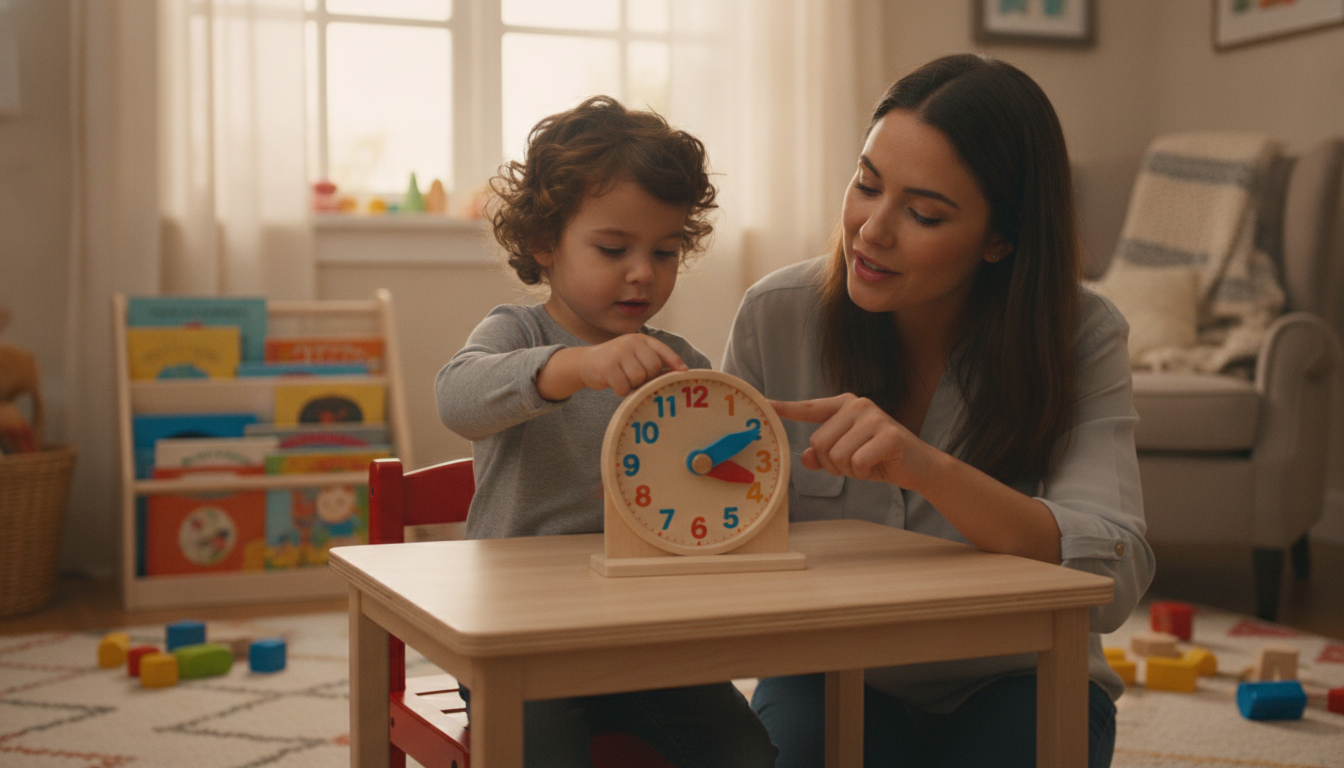
- Remove and fit the 12 shaped number pieces into the matching recessed wells on the clock face, practicing shape recognition and spatial matching. Children can also match colors between the number pieces and the colored sections on the clock face.
- Rotate the color-coded minute and hour hands to explore time concepts, which involves gripping and turning actions. These movements allow children to practice hand-eye coordination and finger dexterity. General research suggests that play materials requiring manipulation and precise hand movements can help children exercise the small muscles in their hands and fingers, supporting skills needed for tasks like drawing and writing (NAEYC - Preschoolers at Play). This is general guidance about fine motor play, not evidence for this specific toy.
- Take turns and share the toy with others. General research highlights that playing with objects and games can help children practice sharing and turn-taking, which are important social skills (HealthyChildren.org - The Power of Play). This is general play guidance, not a claim about this specific product.
Play ideas to try
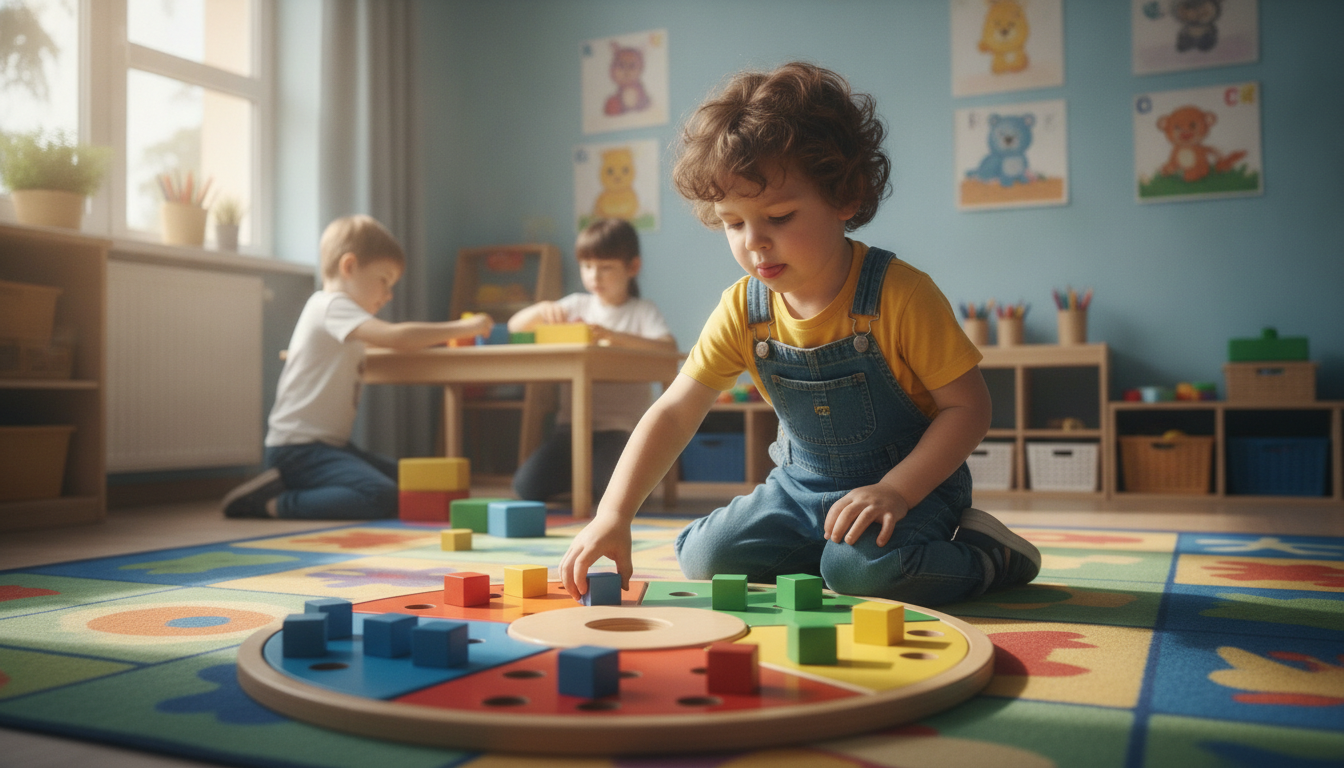
- Shape and Color Match Game: Encourage your child to identify and place each shaped number piece by matching both shape and color to its slot on the clock face.
- Clock Hand Practice: Invite your child to turn the minute and hour hands to different positions and describe the time using whole or half hours as an introduction to time-telling.
- Optional Parent Suggestion: Use the extension activities printed on the packaging to play simple games that combine sorting, counting, and early time-telling concepts, supporting parent-child interaction.
Before you buy

This set includes one wooden clock and 12 numbered shaped pieces (Amazon listing). The pieces are sized for preschoolers but must be kept away from children under 3 years old due to choking risk. The clock measures approximately 9 x 9 x 4.5 inches, making it suitable for tabletop play and requiring some storage space. The toy features bright colors and a natural wood surface. It is important to keep track of all pieces to avoid loss. Extension activities are included on the box for additional play ideas. This toy is best for children who enjoy puzzles and hands-on activities involving numbers and time. It may not be ideal for children who are uninterested in manual puzzles or who prefer electronic or interactive toys.
When another type may fit
If a child within the age range is less interested in clocks or shape sorting, a simpler number or color sorting toy with fewer pieces may be a better match. Families concerned about small parts might prefer tactile toys or manipulative blocks with single shapes suited to the child’s sensory preferences.
Sources
- Product listing: Amazon Melissa & Doug Shape Sorting Clock
- NAEYC - Preschoolers at Play: https://www.naeyc.org/sites/default/files/globally-shared/downloads/PDFs/resources/pubs/preschoolers-at-play-chap-15.pdf
- HealthyChildren.org - The Power of Play: https://www.healthychildren.org/English/family-life/power-of-play/Pages/the-power-of-play-how-fun-and-games-help-children-thrive.aspx
Research sources above provide general guidance about play and fine motor activities, not specific evidence for this product.