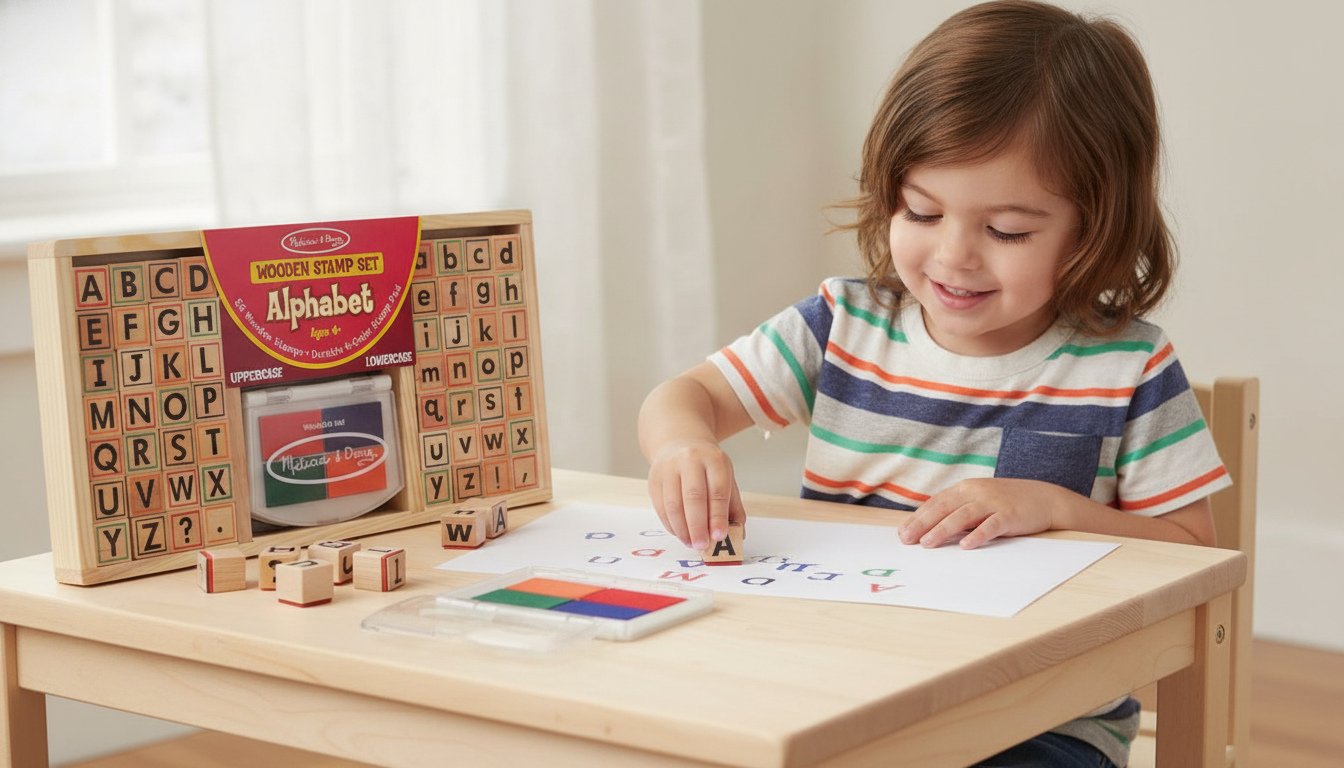
Kids ages 4+ can stamp words and messages with 56 upper- and lowercase letter and punctuation stamps. Includes wooden handles, a four-color washable ink pad… Amazon
Who this toy suits

The Melissa & Doug Wooden Alphabet Stamp Set suits children ages 4 and up who enjoy letters, names, messages, or making repeated impressions with ink. Both the listing title and manufacturer description give a minimum age of 4; this is not a toy for 3-year-olds.
Children can begin by choosing a familiar letter or stamping a colorful row without spelling independently. Those interested in words can select letters for names and short messages. This is an alphabet-based arts-and-crafts set rather than a construction toy or a set of pretend-play figures.
What children can do and learn

- Choose, name, and stamp letters. Children can find a familiar letter, stamp it, and compare the impression with another letter. This offers practice looking at and naming letter shapes. NAEYC’s Everyday Steps to Reading and Writing includes ABC stamps among its suggested alphabet activities for exploring letter recognition. Begin with a few letters that interest your child rather than expecting them to identify the whole alphabet.
- Arrange letters for a name or message. Children can choose stamps and press them in sequence, with an adult providing a written example if wanted. This offers practice selecting and ordering letters for a particular purpose. NAEYC’s guidance on emergent writing describes names as meaningful to children and recommends opportunities to experiment with writing. Stamping can sit alongside drawing and handwriting, rather than replacing them.
- Ink, position, and press. Children can grasp the contoured wooden handles, move a stamp from the ink pad to paper, and compare the marks they make. They can try placing impressions beside one another or choosing different ink colors. These are observable actions to explore, not promises of improved coordination or other developmental outcomes.
Play ideas to try

These are optional parent suggestions, not additional manufacturer game rules. Use your own paper for each activity.
- Make a name strip. Write your child’s name as a reference if helpful, then invite them to stamp it one letter at a time. Say the letters together and let your child choose ink colors. Starting with just the first letter is also an option.
- Pair uppercase and lowercase letters. Set out three uppercase stamps and their lowercase partners. Help your child find each pair and stamp the two impressions side by side. Offer fewer pairs if searching through the stamps takes over the activity.
- Stamp a short message. Help your child choose a short word or greeting, then select the letters together. Read the finished message aloud. Leave spacing and alignment informal, and let your child decide whether to add more marks.
Before you buy

The Amazon listing specifies 56 stamps, contoured wooden handles, a four-color stamp pad, and a wooden storage box. The ink colors are red, blue, green, and orange. The listing describes the inks as washable and non-toxic, and notes that packaging may vary.
Uppercase and lowercase letters are documented, as are punctuation stamps. However, the supplied descriptions disagree about the punctuation count and assortment, so do not rely on a particular punctuation mark being included without checking the current packaging.
Allow table space for the box, ink pad, and paper, with room to set chosen stamps aside. Protect the work surface rather than assuming washable ink will come out of every material. Returning the individual stamps to the box can be part of cleanup. Follow the package’s safety directions and retain the 4+ minimum age.
When another type may fit
For a child who mainly wants to make pictures, drawing materials may be a better fit than alphabet stamps. If you prefer fewer separate pieces to put away, consider a drawing board instead.
Sources
The research offers general literacy-play guidance, not testing or endorsement of this particular set or evidence that it produces improvements.