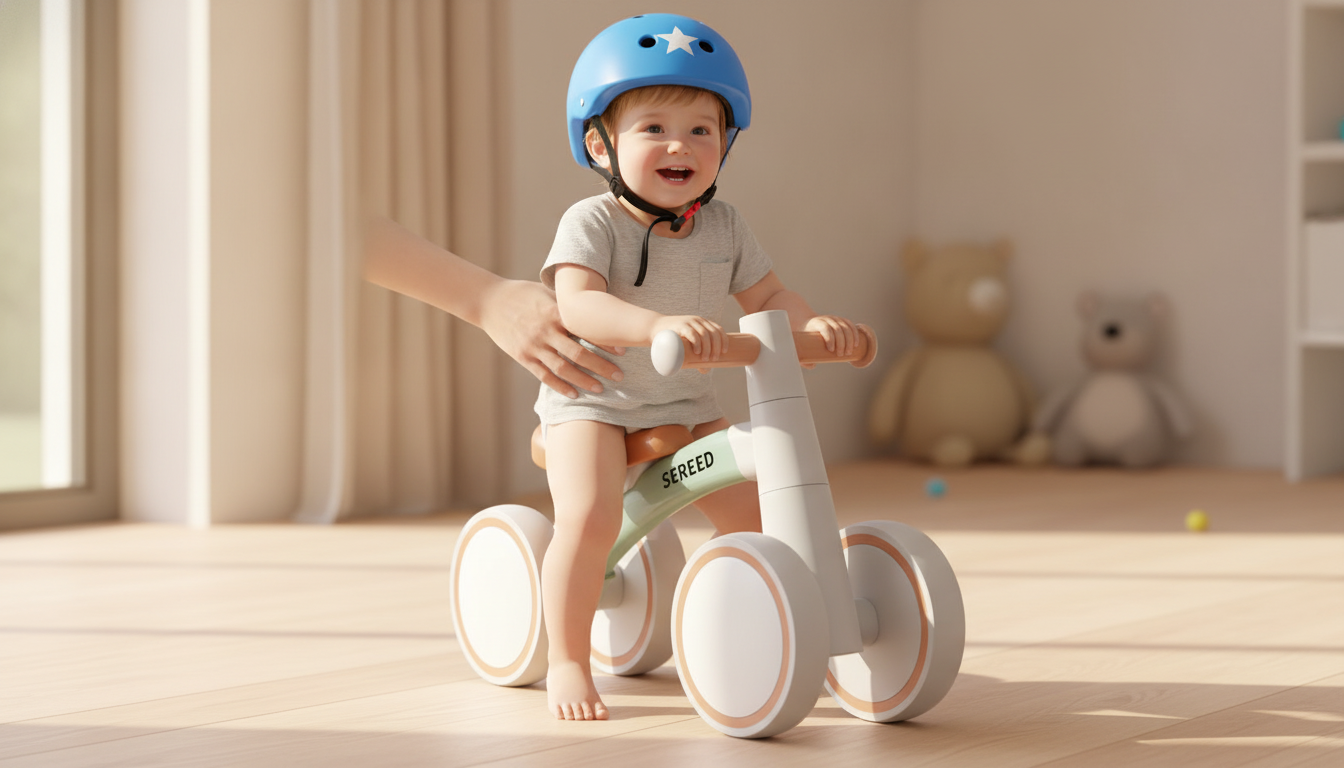
For ages 12–24 months, this pedal-free balance bike lets toddlers ride indoors or outdoors. It includes an aluminum alloy frame, closed wheels, non-slip handles, a soft seat and a 135° steering limit. View on Amazon
Who this toy suits
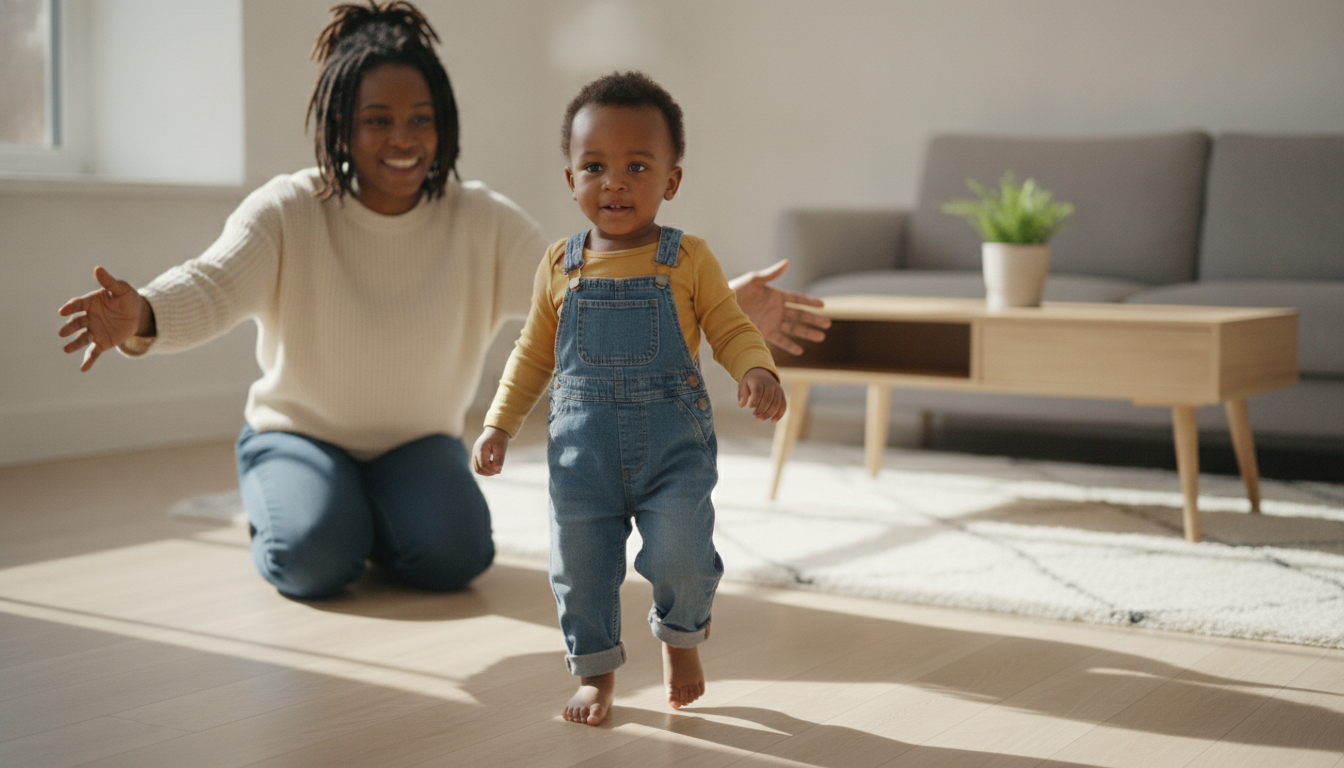
The SEREED Baby Balance Bike is a pedal-free ride-on for toddlers who are interested in sitting astride a vehicle and moving with their feet. The listing recommends 12–24 months, with a manufacturer minimum age of 1 year. Do not use it before 12 months; adult supervision does not override that minimum.
It is an option for families seeking foot-powered riding rather than pedalling. Before choosing it, consider whether your child wants to sit on a ride-on and whether the bike fits. A child can also look at or touch the stationary bike without being asked to ride. Keep invitations brief and stop when the child loses interest.
What children can do and learn
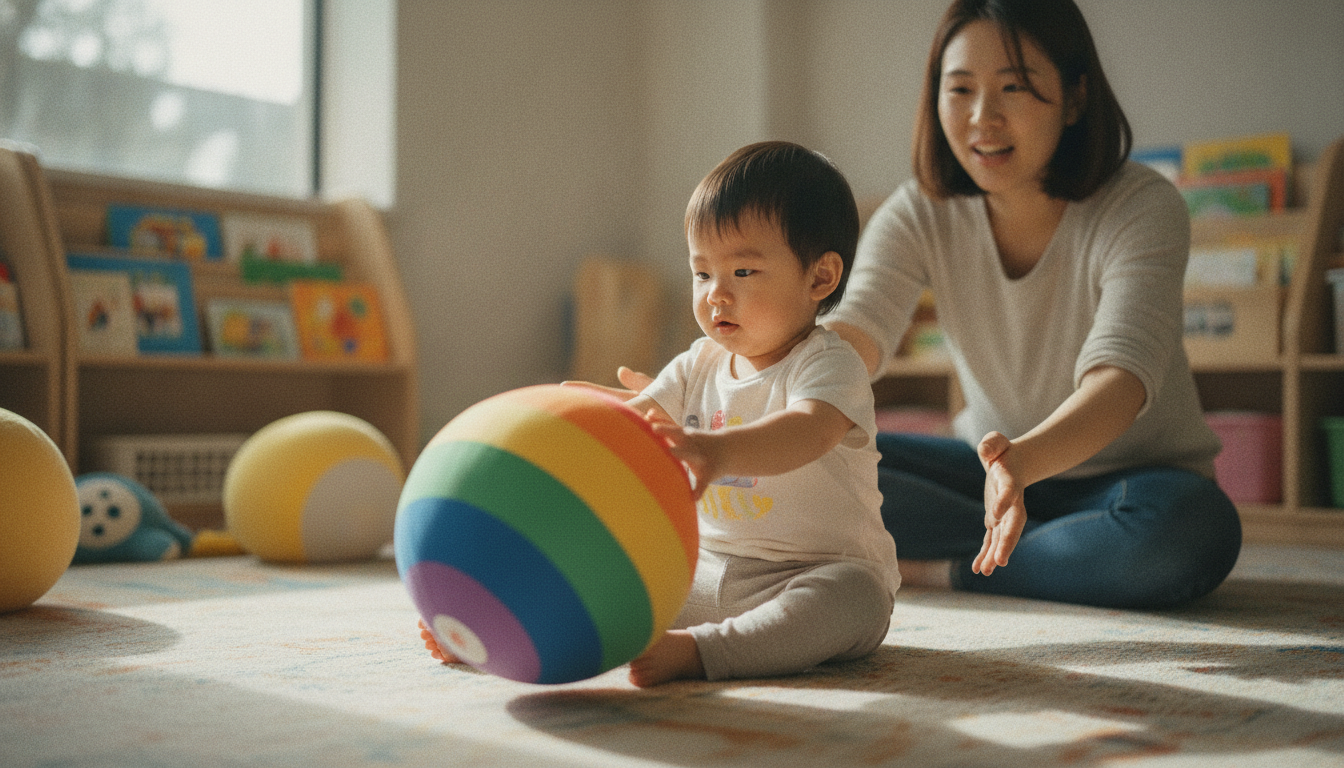
- Try foot-powered movement. With no pedals, the bike offers an opportunity to practice pushing against the floor with the feet while seated. In its guidance for ages 1–3, the American Academy of Pediatrics recommends offering children different body movements, such as walking, jumping and standing on one leg: AAP movement-play suggestions. That recommendation provides general context for movement play, rather than evidence of an improvement from this bike.
- Explore the handlebar’s movement. The listing documents a 135° turning limit. During supervised use, a child can try a small handlebar movement and observe the bike’s direction. An adult can describe the visible action—“You moved the handle”—without requiring a particular route or treating the activity as a skill test.
Play ideas to try
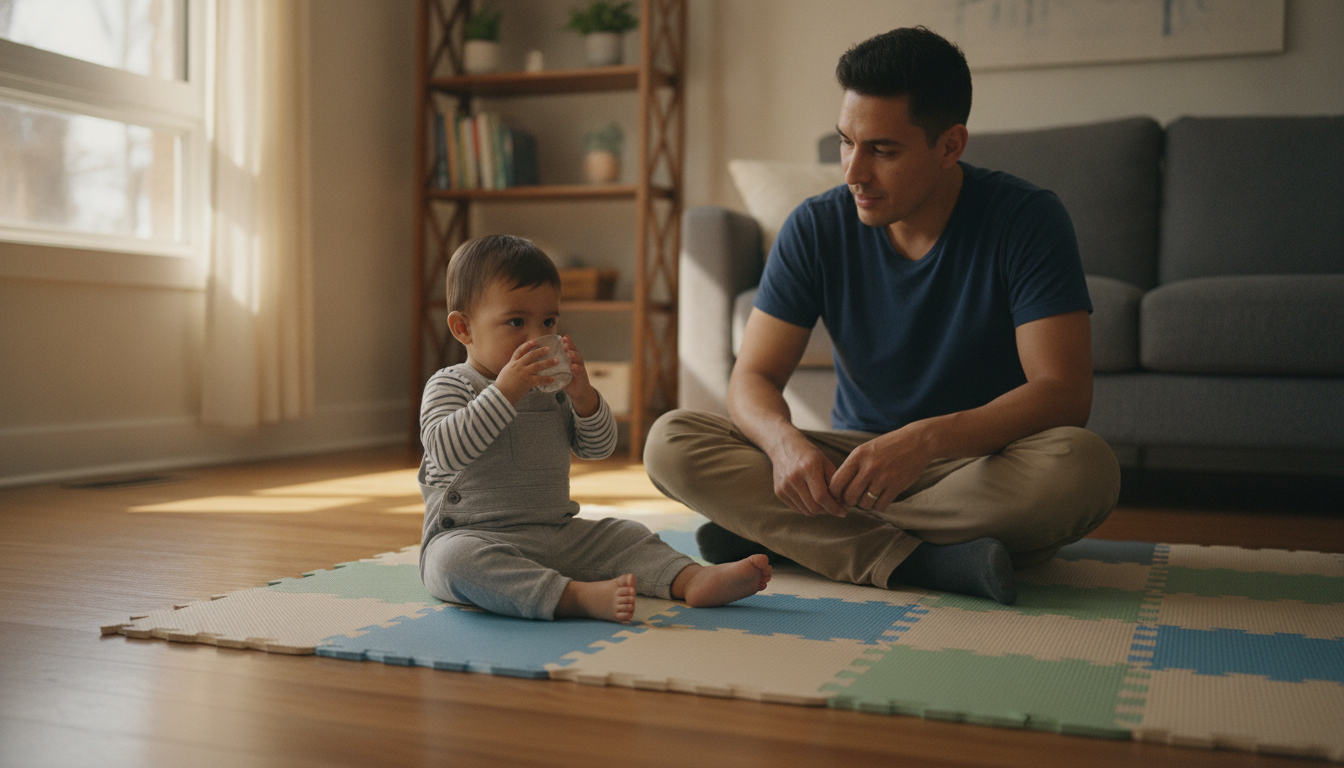
These are optional parent suggestions, not additional manufacturer instructions or official play modes. Choose a clear, level space, remain beside the child and stop if they seem uncomfortable or uninterested.
- A few foot pushes. Invite the child to try a short movement while you stay alongside. There is no required distance or destination, and watching instead is fine.
- One gentle turn. In an open space, invite a small handlebar movement during a short, foot-powered ride. Do not require the child to follow a marked path.
- Move, then rest. Offer a stationary break after a few pushes. Help keep the bike still as needed, and let the child choose whether to continue or finish. This is not a test of independent stopping.
Before you buy
The maximum rider weight is 55 pounds. Check that the child can reach the handles and place their feet comfortably on the floor. Seat height and overall dimensions are not supplied here, so confirm those measurements before deciding about fit or storage.
The listed included component is the balance bike. Documented features include closed wheels, a softly supportive seat and the 135° turning limit. The listing describes indoor and outdoor use. None of these features should be treated as a guarantee against falls or tipping.
The manufacturer says never to leave a child unattended during use. The CPSC’s riding-toy safety advice also calls for supervision and appropriate safety gear, including a properly worn helmet sized to fit.
When another type may fit
For a child who prefers stationary, hands-on play, consider an age-appropriate stacking or nesting toy. If you want pedal-powered riding, consider that different type of ride-on only when the child meets its own age and fit requirements; this bike has no pedals.
Sources
Research and agency guidance concern general play and safety, not testing or endorsement of this bike.