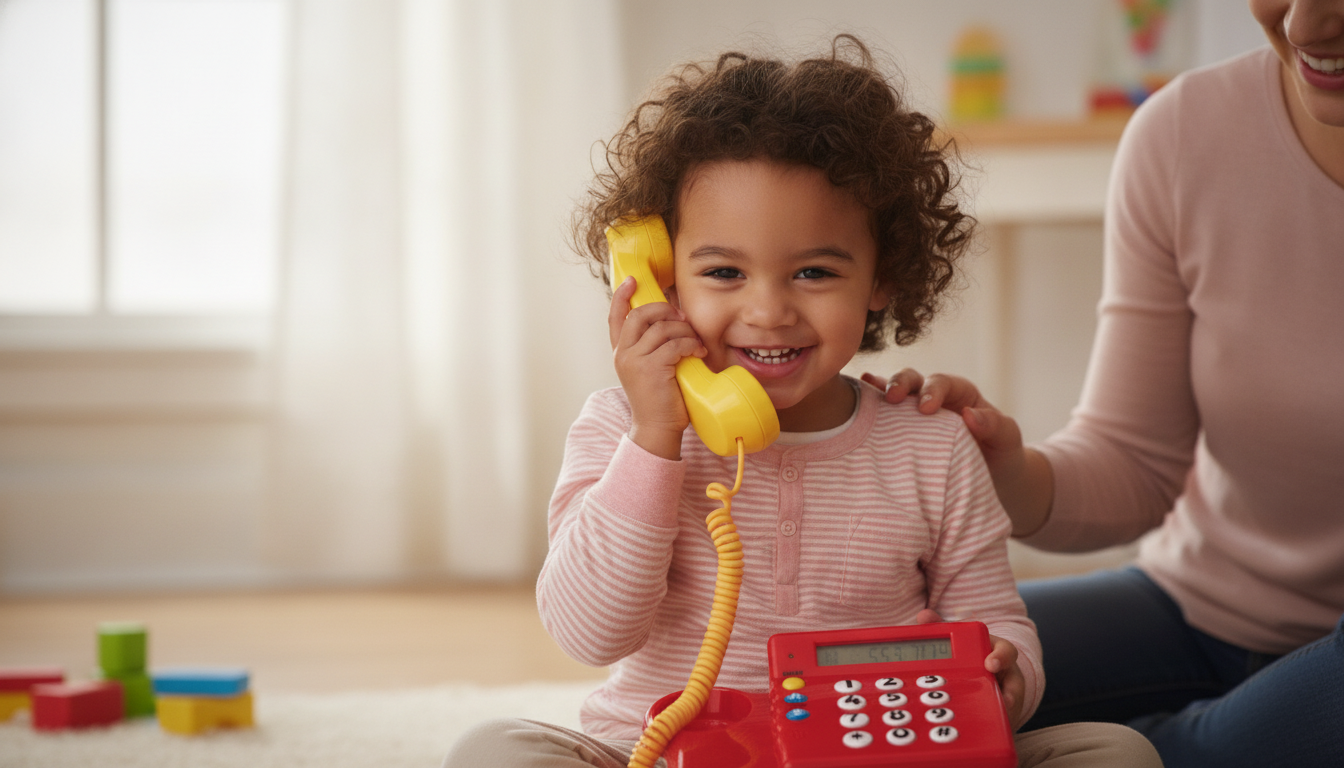
This pretend play telephone includes programable numbers, recording features, large buttons, and a realistic ringing sound. Players dial and hear recorded messages for correct numbers, practicing phone use and role-play. Amazon
Who this toy suits
The Learning Resources Teaching Telephone is designed for children ages 3 to 10 years, according to the manufacturer. It is a good fit for preschoolers and early elementary-aged children who enjoy pretend play and are interested in imitating adult phone use. The toy's extra-large buttons and realistic ringing sound make it accessible for young children who are beginning to explore role-play and simple number recognition. Because the minimum recommended age is 3 years, it is not suitable for children under 36 months.
What children can do and learn

- Pretend dialing and role-play conversations: Children can program important phone numbers and record a message. When the correct number is dialed, the message plays back, supporting pretend phone conversations and turn-taking. This encourages children to practice social language and communication skills during imaginative play. General research highlights that pretend play with objects like toy phones gives children opportunities to experiment with social roles and language (HealthyChildren.org).
- Memory and sequencing practice: Programming and dialing numbers allows children to practice recalling number sequences and associating them with specific people or purposes. This repetition offers a chance to practice memory and sequencing skills. Research notes that play activities involving recalling and organizing information can help children practice cognitive skills, though this is general guidance and not specific to this toy (NAEYC).
- Auditory and tactile engagement: The phone provides sensory feedback through its ring, button presses, and recorded messages. This lets children explore cause and effect as they interact with the toy. Studies of interactive toys suggest that tactile and auditory features can motivate children to engage in make-believe play, but this is general play research and not a direct evaluation of this product (Monash University).
Play ideas to try
- Emergency number practice: Program the 911 number with a recorded safety message. Use the toy to role-play emergency calls, helping children learn when and how to dial 911.
- Family message center: Record a message for a family member's number. Encourage your child to "call" relatives and listen to or leave messages, supporting pretend social interactions.
- Number sequence game: Say a number sequence for your child to dial and listen for the recorded message. Or let your child invent codes to "call" imaginary characters, encouraging memory and creative role-play. (These are optional parent suggestions, not official game modes.)
Before you buy
The Teaching Telephone requires 3 AA batteries (included) and measures approximately 12 x 11.9 x 3.4 inches. It features large buttons and a realistic ring. The toy allows programming of numbers and recording a message, but only one recorded message can be stored at a time and is linked to the dialed number. The sound volume is relatively loud, so adults may wish to supervise play to manage noise. Some users may find the single-message limit restrictive if frequent message changes are desired.
When another type may fit
If your child prefers simple pretend play without programming or recorded messages, a basic toy phone with fewer features and no batteries may be more suitable. This can support early role-play for toddlers who are not yet interested in dialing or listening to messages.
Sources
- Learning Resources Teaching Telephone on Amazon
- NAEYC: Things Every Parent Should Know about Play
- HealthyChildren.org: The Power of Play: How Fun and Games Help Children Thrive
- Monash University Research on Make-believe Play with Internet of Toys
Research sources above provide general information about play and are not direct endorsements or evaluations of this specific toy.